
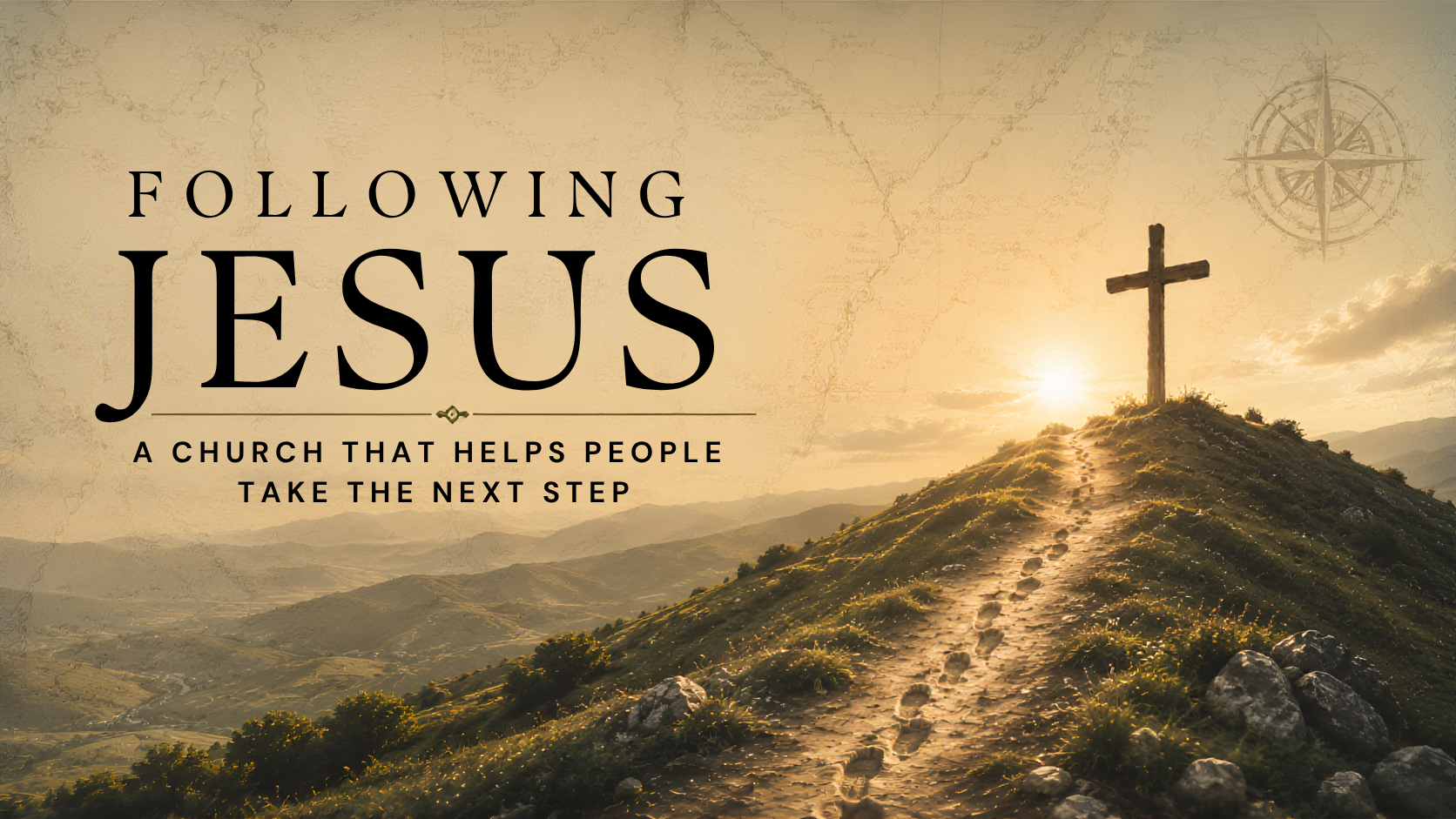
Following Jesus is not about becoming less human. It is about becoming more fully the people God created us to be.
Have you ever been talking with someone and realized that, although you were physically present, your mind was somewhere else?
Maybe you were thinking about the next thing you needed to do. Maybe you were distracted by something on your phone. Or maybe you were already thinking about what you wanted to say next instead of really listening.
Most of us have experienced something like that.
We live in a world that can make it difficult to remain attentive to one another. We can become hurried, distracted, isolated, or so focused on achievement that we lose sight of the people around us.
And I don’t think most of us intend to live that way.
We want to be present. We want to be patient. We want to be people who notice and care. Yet sometimes there is a distance between the kind of people we want to be and the way we actually live.
That raises a question worth considering: What does it mean to be fully human?
Christian faith gives us a particular way of answering that question. We look to Jesus.
In Christ, we see a life shaped by love, mercy, courage, faithfulness, and service. Following Jesus is not about becoming less human. It is about becoming more fully the people God created us to be.
And that doesn’t happen all at once.
Christ Has Taken Hold of Us
The apostle Paul gives us a picture of this continuing journey in his letter to the Philippians. He has followed Christ for years, yet he does not speak as though he has arrived.
He is still pressing on.
“Not that I have already obtained this or have already reached the goal; but I press on to make it my own, because Christ Jesus has made me his own.”
— Philippians 3:12, NRSVUE
Despite years of faithful ministry, Paul acknowledges that there is still more to learn and more ways his life can be shaped by Christ.
But notice what gives him the confidence to keep going.
He presses on because Christ Jesus has already made him his own.
That order matters.
Paul is not trying to earn Christ’s acceptance. He is responding to the grace that has already taken hold of his life.
There is a difference between spending our lives trying to prove that we are enough and living because we have discovered that we are already loved.
Sometimes we approach faith as though, if we pray enough, serve enough, or become good enough, God will finally be pleased with us.
But Paul gives us a different picture. He presses on because Christ has already taken hold of him. Christ’s grace has given his life a new direction.
We are not trying to become someone God might someday love. We are learning to live as people who are already loved.
This is deeply connected to the Methodist understanding of grace. God’s grace comes before our response, awakens us to God’s love, and continues shaping us throughout our lives. We do not grow in faith in order to make God love us. We grow because God’s love is already at work in us.
As Paul writes elsewhere, “For by grace you have been saved through faith,” and we are created in Christ Jesus for good works (Ephesians 2:8–10).
Grace is not the reward for our progress. Grace is the beginning, the strength, and the continuing source of our growth.
Becoming More Fully Human
If Christ has taken hold of us, what kind of life is that grace drawing us toward?
The opening chapter of 2 Peter offers a helpful picture. Before calling believers to make every effort to grow, the writer reminds them that God has already given them what they need for life and godliness (2 Peter 1:3).
Once again, grace comes first.
But grace also invites us to participate in the work God is doing.
The passage calls believers to grow in faith, goodness, knowledge, self-control, endurance, godliness, mutual affection, and love (2 Peter 1:5–7).
This is not a checklist for proving that we are good Christians. It is a picture of the character God’s grace is forming in us.
For some, that may mean learning self-control. For others, it may mean patience when change takes longer than hoped. It may mean growing in courage, becoming more attentive to others, or recognizing more deeply that we belong to one another.
And all of it moves toward love.
Not simply love as a feeling, but love that takes shape in the way we live.
This brings us back to our question about humanness.
What if becoming more like Christ is also becoming more fully human—more capable of love, more attentive to others, more faithful in our relationships, and more willing to serve?
The New Testament describes this transformation in several ways. Paul speaks of being “transformed by the renewing of your minds” (Romans 12:2). He describes the fruit of the Spirit as love, joy, peace, patience, kindness, generosity, faithfulness, gentleness, and self-control (Galatians 5:22–23).
These are not qualities that make us less human. They help us become more fully the people God created us to be.
In Methodist theology, this continuing work of grace is often called sanctification. It is the process by which God’s love increasingly shapes our hearts and lives. John Wesley understood Christian perfection not as flawless performance, but as being perfected in love.
The goal is not to become people who no longer need grace. It is to become people whose lives increasingly reflect the love of Christ.
And that kind of growth often takes shape in the ordinary moments of life.
The Next Faithful Step Is Often Ordinary
Sometimes spiritual growth involves major decisions or new opportunities to serve. But often the next faithful step is much closer to home.
It may be learning to listen when we would rather respond.
It may be offering forgiveness, setting a healthy boundary, asking for help, or making time for prayer.
It may be noticing something that needs to be done and choosing to do it in love, even when no one else will notice.
It may be speaking up when someone is being treated unjustly, making room for a person who has been excluded, or choosing compassion when it would be easier to turn away.
Jesus reminds us that love of God and love of neighbor belong together (Mark 12:29–31). The letter of James similarly reminds us that faith takes shape in action, particularly in our care for those in need (James 2:14–17).
The next step will not look exactly the same for everyone. We have different gifts, different circumstances, and different places where God’s grace is inviting us to grow.
The goal is not to compare our progress with someone else’s. It is to respond faithfully to the grace already at work in our lives.
So perhaps the question is:
Where is Christ inviting me to become more loving, more faithful, and more fully human in the life I am actually living?
Paul offers a helpful word here. In Philippians 3:16, he encourages believers to continue faithfully from where they are.
We do not have to pretend we are somewhere we are not. And we do not have to begin again from nothing.
We can take the next faithful step from where we are today.
We Were Never Meant to Grow Alone
Following Jesus was never meant to be a solitary journey.
The Christian life is personal, but it is not private. We grow through relationships, shared practices, encouragement, accountability, and opportunities to love and serve.
The early church devoted itself to the apostles’ teaching, fellowship, the breaking of bread, and prayer (Acts 2:42). The writer of Hebrews encourages believers to consider how they might “provoke one another to love and good deeds” (Hebrews 10:24).
That is a beautiful description of what Christian community can be.
A healthy church does more than invite people to attend worship. It helps people discover what following Jesus looks like in their lives and encourages them as they take the next step.
That means doing more than telling people they should pray, study Scripture, serve, or grow in faith. It means helping one another discover how.
Someone who wants to begin praying may need another person to show them that prayer doesn’t have to be complicated.
Someone exploring Scripture may need a place where questions are welcome.
Someone who wants to serve may need help discovering where their gifts fit.
And someone who is struggling may need a trusted person who will listen without immediately trying to fix everything.
Sometimes the next step is not taking on another responsibility. It may be learning to rest, asking for help, or allowing others to care for us.
A church that helps people grow should not simply become a church that keeps asking people to do more.
We are called to help one another become more fully the people God created us to be.
We learn from one another. We share our gifts, our questions, our struggles, and our hopes.
We are not here to measure one another’s progress.
We are here to encourage one another’s faithfulness.
A Community of Grace
This is one reason Christian community matters so deeply.
When someone becomes part of a church, the hope is not simply that another name will be added to a membership roll. The deeper hope is that another person will find a community in which to discover Christ, grow in grace, and share in the life and mission of the church.
Membership is not a declaration that someone has arrived. It is a commitment to continue following Christ within a community that promises to walk alongside one another.
And that invitation extends beyond formal membership.
Whether someone has been part of a church for decades, is returning after time away, is exploring faith for the first time, or is simply wondering what it might mean to follow Jesus, there is room to take a next step.
The church is not meant to be a gathering of people who have already figured everything out. It is a community of people learning to respond to grace together.
That is part of the beauty of the Methodist tradition’s emphasis on the means of grace—practices such as prayer, searching the Scriptures, worship, Holy Communion, Christian fellowship, and works of mercy.
These practices are not ways of earning God’s love. They are ways of making ourselves available to the grace that is already seeking and shaping us.
They help us grow in love of God and neighbor.
And they remind us that spiritual growth is not simply about becoming more religious. It is about becoming more loving.
Pressing On Together
Paul writes:
“I press on toward the goal for the prize of the heavenly call of God in Christ Jesus.”
— Philippians 3:14, NRSVUE
He is not standing at the finish line congratulating himself. He is still following.
And so are we.
Following Jesus is not about becoming less human. It is about becoming more fully the people God created us to be.
People whose lives are shaped by love. People who notice one another, make room for others, serve, forgive, seek justice, and continue learning what it means to follow Christ.
We have not arrived. But Christ has taken hold of us, and grace is still at work.
So perhaps the question for each of us is:
What is my next faithful step?
Not the step I think I should have taken years ago. Not someone else’s step. The next step Christ is inviting me to take now.
And how can we help one another take those steps?
Because the goal is not simply to become busier, more accomplished, or more religious. It is to become people and communities whose lives more fully reflect the love of Christ.
And we do not have to accomplish that on our own.
The same Christ who calls us has already taken hold of us. The same grace that brought us this far will continue to guide us.
Christ is still calling. Grace is still working. And we can keep following together.
A Question for Reflection
Where might Christ be inviting you to take your next faithful step? Perhaps it is a step toward prayer, reconciliation, service, rest, or a deeper connection with others. Consider sharing that question with someone you trust, and look for one small way to respond to God’s grace this week.
Scripture for Further Reflection
Philippians 3:12–16; 2 Peter 1:3–8; Ephesians 2:8–10; Romans 12:1–2; Galatians 5:22–23; Mark 12:29–31; James 2:14–17; Acts 2:42–47; Hebrews 10:23–25.


