
How Much Is Enough? Finding Freedom in God’s Generosity
25 Oct 2026 Leave a comment
in Devotions

What if having enough isn’t just about what we have, but about what we’re willing to share?
Scripture: Exodus 16:13–18; Matthew 6:19–21, 24–34
How much is enough?
It’s a question most of us have asked, whether we realize it or not.
We think that if we could get a little further ahead, have a little more saved, or get one more thing taken care of, then maybe we could finally relax.
But there’s always something else.
Another expense. Another concern. Another reason to think we need just a little bit more.
And so enough becomes a moving target.
We spend so much time wondering whether we’ll have enough for ourselves that we can easily overlook another important question:
Will there be enough for everyone?
That question takes us into two biblical stories, one about God’s people gathering bread in the wilderness and another about Jesus teaching his followers what it means to trust God.
Together, they invite us to reconsider what enough really means.
Where Your Treasure Is
In the Sermon on the Mount, Jesus offers a challenging reminder:
“For where your treasure is, there your heart will be also.” — Matthew 6:21 (CEB)
Before Jesus tells us not to worry about tomorrow, he talks about treasure.
And I think that’s important.
Because what we treasure shapes what we pursue, what we protect, and what we believe will finally be enough.
Think about how often we hear the message that life would be better if we just had a little more.
A little more money. A little more security. A little more of whatever we think will make life easier.
There’s nothing wrong with providing for our families, preparing for the future, or enjoying life’s good things.
But Jesus asks us to notice what happens when having more becomes the thing we’re always chasing.
There’s a difference between having what we need and believing we’ll never have enough.
If our greatest treasure is having more, then enough will always seem just beyond our reach.
There will always be something else to acquire, protect, or worry about losing.
But Jesus invites us to imagine a different kind of life.
A life where our security isn’t determined entirely by what we’ve accumulated.
A life where our possessions don’t have to possess us.
A life where the pursuit of more doesn’t become the center of everything.
And then Jesus makes the invitation even clearer:
“You cannot serve God and wealth.” — Matthew 6:24 (CEB)
Jesus isn’t saying that money itself is evil. He’s asking which one will be our master.
Will our lives be shaped by the endless pursuit of more? Or will they be shaped by the generosity and goodness of God?
Because the answer changes what we believe enough looks like.
Look at the Birds
After speaking about treasure, Jesus turns our attention toward something wonderfully ordinary.
Birds.
“Look at the birds in the sky. They don’t sow seed or harvest grain or gather crops into barns. Yet your heavenly Father feeds them.” — Matthew 6:26 (CEB)
I love that Jesus points his disciples toward something so simple.
Not some great miracle.
Just birds.
It’s as though Jesus is saying, Pay attention. There’s something here I want you to see.
Of course, Jesus isn’t suggesting that birds never search for food or that we shouldn’t work, plan, or care for our families.
He’s inviting us to recognize something we easily forget.
The world is sustained by a God who cares for creation.
And if God cares for the birds, how much more does God care for us?
That doesn’t mean faithful people never experience hunger, hardship, or uncertainty. We know that’s not true.
Some people work hard and still struggle to pay their bills. Some families face impossible choices between groceries, medicine, and housing. Sometimes tomorrow really does bring reasons to worry.
Jesus’ words should never become an excuse to dismiss those struggles or tell people they simply need more faith.
Instead, they remind us that our needs matter to God.
And they challenge us to consider how God’s care might be made visible through the ways we care for one another.
When Everyone Had Enough
Long before Jesus spoke about the birds, the Israelites faced their own struggle with fear and uncertainty.
They were traveling through the wilderness after escaping slavery in Egypt. They were hungry, frightened, and unsure how they would survive.
Their concerns were understandable.
They had families to feed. Children to care for. A future they couldn’t see.
And in Exodus 16, we read that God heard their complaints and provided bread from heaven, which the people called manna.
But the remarkable part of the story isn’t simply that God provided food.
It’s what happened when the people gathered it.
“The ones who had collected more had nothing left over, and the ones who had collected less had no shortage. Everyone collected just as much as they could eat.” — Exodus 16:18 (CEB)
Everyone had enough.
Some gathered more. Some gathered less. But the community’s provision wasn’t measured by who could accumulate the most.
It was measured by whether everyone had what they needed.
And notice something else.
God provided for the Israelites even while they were complaining.
Not because they had finally learned to trust.
Not because they had stopped being afraid.
God provided because God is faithful.
Through that daily provision, the people were invited to learn a different way of living.
They could gather what they needed for today.
Tomorrow, they would learn to trust again.
And there was another lesson woven into that daily bread.
God’s provision wasn’t simply about one person having enough.
It was about a whole community discovering that everyone could have enough.
Centuries later, the apostle Paul would return to this very story when encouraging the Corinthians to share their resources so that the needs of others could be met (2 Corinthians 8:13–15).
For Paul, the manna story wasn’t just ancient history. It was a picture of what a generous Christian community could look like.
Those who had abundance could help those who were experiencing need.
God’s idea of enough includes our neighbors.
Seek First the Kingdom
This brings us back to Jesus’ teaching in Matthew 6.
After speaking about treasure, wealth, and worry, Jesus says:
“Instead, desire first and foremost God’s kingdom and God’s righteousness.” — Matthew 6:33 (CEB)
Notice what Jesus doesn’t say.
He doesn’t say, Make sure you have everything you need, and then, if there’s anything left, think about somebody else.
He invites us to make God’s kingdom our first priority.
And what does that kingdom look like?
It’s a kingdom where people are loved, mercy is shown, those who struggle aren’t forgotten, and God’s gifts become blessings for others.
It’s a kingdom shaped by the kind of righteousness that seeks justice, practices compassion, and loves our neighbors as ourselves (Matthew 22:37–40).
This understanding of faith is deeply rooted in the Methodist tradition.
John Wesley believed that God’s grace transforms not only our relationship with God but also our relationships with one another. Faith was never meant to be something we practiced only in private.
It was meant to take shape in lives of mercy, generosity, and love.
Wesley encouraged Christians to use their resources wisely and generously, famously teaching, “Gain all you can, save all you can, give all you can.”
Not because giving earns God’s favor.
But because everything we have is already a gift of grace, and grace invites a response.
Psalm 24:1 reminds us that the earth and everything in it belong to God.
And Romans 12:1 invites us to offer our whole lives in response to God’s mercy.
When we begin to see our lives through that lens, stewardship becomes about much more than money.
It’s about recognizing that what God has placed in our hands can become part of God’s care for someone else.
A meal shared.
A need met.
A generous gift.
A helping hand.
A community that notices when someone is struggling and responds with compassion.
What we’ve received doesn’t have to stop with us.
God’s generosity can become generosity through us.
Generosity Changes What Enough Means
There’s something freeing about this way of understanding enough.
When the pursuit of more is no longer the center of our lives, we’re freer to notice what we already have.
Freer to recognize the needs around us.
Freer to share.
This doesn’t mean we should ignore our own needs or give beyond what we can responsibly afford. Paul reminds the Corinthians that generosity isn’t meant to create hardship for one person while relieving hardship for another (2 Corinthians 8:12–13).
Rather, generosity invites us to recognize that we belong to one another.
As Paul writes in 1 Corinthians 12:26, when one part of the body suffers, every part suffers with it.
Our neighbors’ needs matter, too.
And perhaps that’s one of the most important lessons in the story of the manna.
The question wasn’t whether one person could gather enough to feel completely secure.
The question was whether the whole community could receive what it needed.
Generosity isn’t simply what we do after we’ve accumulated enough. Generosity is one of the ways we learn what enough really means.
And that changes how we think about the gifts God has entrusted to us.
Enough for Today
Near the end of this teaching, Jesus says:
“Therefore, stop worrying about tomorrow, because tomorrow will worry about itself.” — Matthew 6:34 (CEB)
Those words can be difficult to hear, especially when life feels uncertain.
But perhaps Jesus isn’t telling us to pretend tomorrow doesn’t matter.
Perhaps he’s reminding us that we don’t have to solve every problem tomorrow might bring before we can do something faithful today.
We can receive today’s gifts with gratitude.
We can notice today’s needs.
And we can share what we have today.
Sometimes that sharing takes the form of a financial gift.
Sometimes it’s a meal delivered to someone who is sick, a ride offered to a neighbor, a few hours spent volunteering, or an encouraging word offered at just the right moment.
Sometimes it’s a church opening its doors to the neighborhood, offering hospitality and kindness without expecting anything in return.
These acts may seem small.
But they’re ways of putting God’s generosity into practice.
And they remind us that stewardship isn’t only about what happens when an offering plate is passed.
It’s about how we live every day.
A Different Question to Carry With Us
So how much is enough?
Perhaps that’s not a question we can answer with a particular dollar amount, a certain balance in a savings account, or a list of things we’ve finally managed to acquire.
Perhaps the better question is this:
What has God already given me that could become enough for someone else?
A little time.
A little encouragement.
A meal.
A helping hand.
A willingness to notice someone else’s need.
When we begin to see our lives that way, we discover something about the heart of God.
God’s generosity isn’t simply something we receive. It’s something we’re invited to share.
Everything we have is a gift (Psalm 24:1).
Our whole lives can become an offering (Romans 12:1).
And what God has entrusted to us can become a blessing to others (2 Corinthians 9:8–11).
Because in God’s kingdom, enough isn’t just about what I have.
God’s idea of enough includes our neighbors.
And by God’s grace, we can begin living that way.
Today.
For reflection: Where in your life does “enough” seem like a moving target? What is one gift—whether time, resources, encouragement, or hospitality—that you could share with someone this week?
All We Need: Enough for Today
21 Oct 2026 Leave a comment
in Devotions
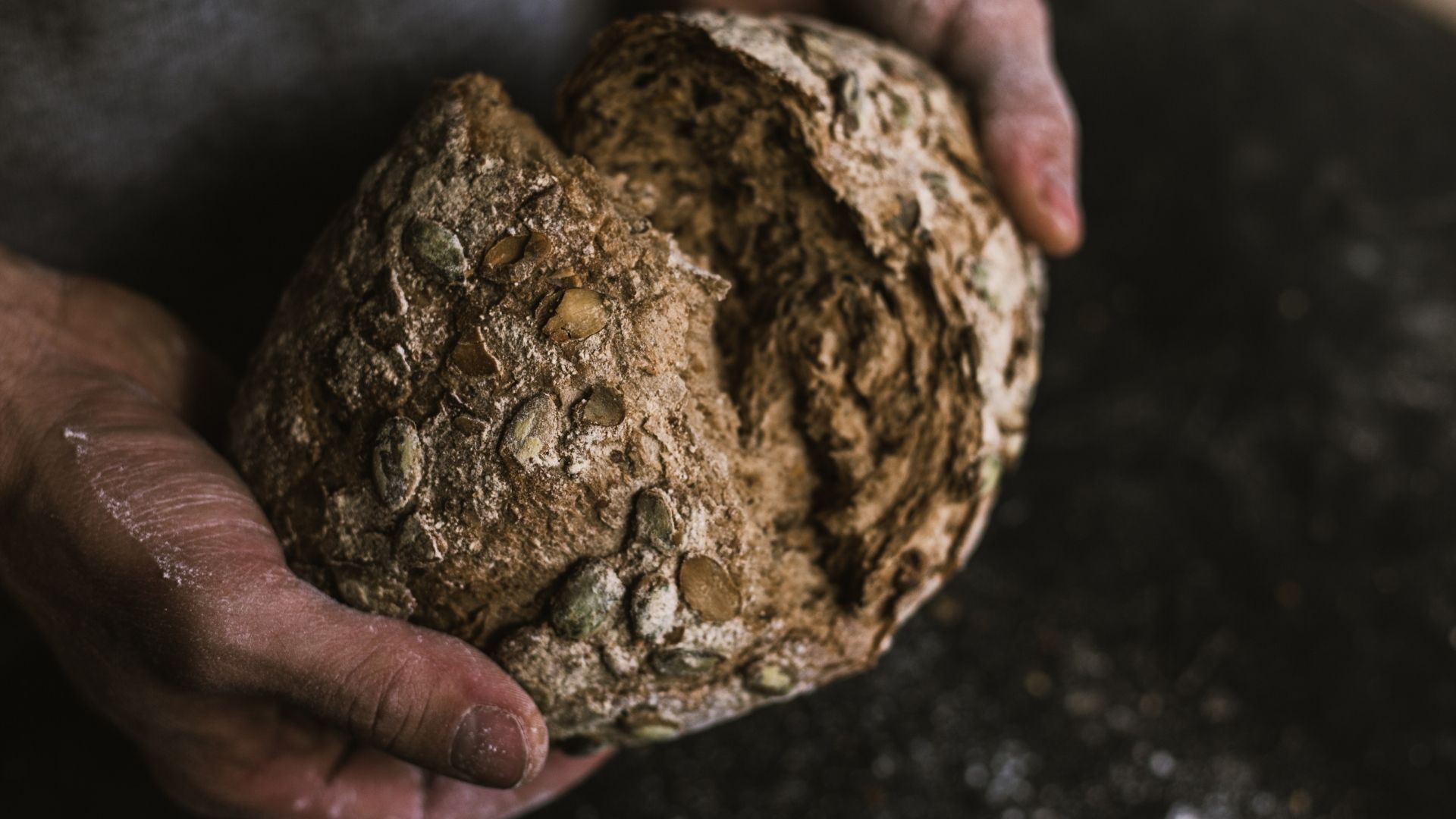
“Instead, desire first and foremost God’s kingdom and God’s righteousness, and all these things will be given to you as well.” ~Matthew 6:33
How much is enough?
It’s a question we considered together in worship on Sunday. And it’s a question that doesn’t always have an easy answer.
We want to provide for our families, prepare for the unexpected, and feel secure about tomorrow. Those are understandable desires. But sometimes the finish line keeps moving. Just when we think we’ll have enough, something else comes along that makes us feel we need a little more.
In the wilderness, the Israelites faced a much more immediate concern. They were hungry and afraid, uncertain where their next meal would come from.
And God met their fear with bread.
Each morning, they gathered manna. Some gathered more, and some gathered less. Yet Scripture tells us that those who gathered more had nothing left over, and those who gathered less had no shortage.
Everyone had enough.
God wasn’t simply providing food. God was teaching the people a different way to live — a way rooted in trust, gratitude, and care for one another.
Centuries later, Jesus invited his followers to seek first God’s kingdom rather than allowing the pursuit of more to control their lives.
That invitation still speaks to us.
It doesn’t mean our needs aren’t real or that planning for tomorrow is wrong. It means we don’t have to wait until every uncertainty is resolved before we can live generously today.
And perhaps the question isn’t simply, “Do I have enough?”
Perhaps it’s also, “What has God already given me that I could share with someone else?”
It might be a meal, a financial gift, a few hours of our time, or an encouraging word to someone who needs to know they haven’t been forgotten.
On Sunday, we remembered that God’s idea of enough includes our neighbors.
That’s worth carrying into the rest of this week.
Because God’s generosity doesn’t have to stop with what we receive. By grace, it can continue through what we share.
What is one gift God has placed in your hands that could become a blessing for someone else this week?
Gracious God, thank you for the gifts that sustain us each day. When we become anxious about what we lack, help us remember your faithfulness. Open our eyes to the blessings we’ve already received and to the needs of those around us. Free us from the endless pursuit of more, and teach us to live with gratitude, trust, and generosity. May your love continue to flow through us into the lives of others. Amen.
All We Are
14 Oct 2026 Leave a comment
in Devotions

“I encourage you to present your bodies as a living sacrifice that is holy and pleasing to God. This is your appropriate priestly service.” ~ Romans 12:1 (CEB)
On Sunday, we talked about a mirror.
When you look into a mirror, what do you see?
You see yourself.
Most of us probably look into a mirror at least once each day without thinking much about it. We check our hair. We make sure everything looks right. Then we move on with our day.
But what if the mirror could become a reminder of something deeper?
Paul writes, “Because of God’s mercies,” offer yourselves as a living sacrifice.
Notice where Paul begins: with God’s mercy.
God does not ask us to offer ourselves in order to earn love, prove our worth, or convince God that we are useful. Grace comes first. We offer ourselves because we have already been surrounded by the mercy and love of God.
And what we offer is more than our money, our abilities, or a few hours of our week.
We offer all that we are.
Our words. Our choices. Our relationships. Our work. Our compassion. Our ordinary days.
That means an ordinary Wednesday can become an offering to God.
Perhaps you listen to someone who needs to talk. You encourage someone who is struggling. You notice someone who feels left out. You give generously. You forgive. You serve. You simply make time to be present.
These things may not seem extraordinary.
But when a life touched by grace becomes a source of grace for someone else, God is at work.
So sometime today, when you catch your reflection in a mirror, pause for just a moment.
Remember first what is already true:
You are loved. You are surrounded by grace. God’s mercy has already come to you.
Then carry this question with you:
God, how can you use me to share your love today?
You may discover that what God wants to use is already looking back at you in the mirror.
Gracious God, thank you for the mercy and grace you have already given me. Continue your transforming work in my life. Open my eyes to the people around me, and show me how my words, choices, gifts, and ordinary moments can become ways of sharing your love. May all that I am become a faithful response to all you have given. Amen.
From All We Have to All We Are
11 Oct 2026 Leave a comment
in Devotions

“I appeal to you therefore, brothers and sisters, by the mercies of God, to present your bodies as a living sacrifice, holy and acceptable to God, which is your spiritual worship.” — Romans 12:1 (NRSVUE)
Stewardship often begins with a simple question:
What has God placed in my hands?
Our time. Our resources. Our abilities. Our relationships. Our opportunities.
Psalm 24 begins with the reminder that “the earth is the LORD’s and all that is in it” (Psalm 24:1). Everything we have ultimately comes from God. Christian stewardship, then, is about receiving those gifts with gratitude and using them faithfully.
But Scripture eventually takes us deeper.
God is not simply interested in what is in our hands. God is interested in the person those hands belong to.
All of Life
In Deuteronomy, Moses tells the people:
“You shall love the LORD your God with all your heart and with all your soul and with all your might.”
— Deuteronomy 6:5 (NRSVUE)
Then Moses makes this command surprisingly ordinary. God’s people are to speak of these words while they are at home and while they are away, when they lie down and when they rise (Deuteronomy 6:6–9).
In other words, loving God is not something confined to a worship service.
Our faith belongs at the kitchen table and in the workplace. It travels with us in the car and accompanies us into difficult conversations. It shapes what we do with our money, how we spend our time, how we treat our neighbors, and how we respond to people who hurt us.
There is no part of ordinary life that falls outside our worship of God.
That can sound like an enormous demand.
All my heart? All my soul? All my strength? God wants all of me?
But before we hear this as one more religious obligation, notice where Paul begins when he talks about offering our whole lives to God.
Because of God’s Mercies
Romans 12 begins with these words:
“By the mercies of God…” (Romans 12:1).
The order matters.
Paul does not say, Offer yourself so that God will be merciful.
Paul does not say, Give God enough of your life and perhaps God will love you.
Paul has spent the previous chapters of Romans describing what God has already done: grace freely given, reconciliation accomplished through Christ, new life offered to people who could never earn it for themselves (see Romans 3:21–26; 5:6–11; 8:1–2, 31–39).
Grace comes first.
Then, because of God’s mercy, Paul invites us to offer our lives in response.
That distinction matters whenever Christians talk about stewardship. Stewardship can easily become a list of everything we ought to do:
Give more.
Serve more.
Volunteer more.
Be more committed.
But the Christian life does not begin with what we give to God. It begins with what God has given to us.
Our generosity, our service, and even the offering of all that we are are responses to grace.
Becoming a Living Sacrifice
Paul describes this response as presenting ourselves to God as a “living sacrifice” (Romans 12:1).
It is a strange and beautiful phrase.
A sacrifice was something placed on an altar and offered to God. But this sacrifice is living.
A living sacrifice gets up in the morning.
It goes to work or school. It makes breakfast. It pays bills. It sits around the dinner table. It cares for someone who is hurting. It makes decisions about money. It chooses how to respond when someone says something hurtful.
A living sacrifice lives an ordinary Tuesday afternoon.
This is where Deuteronomy and Romans meet. Loving God with all that we are means our ordinary lives become places of worship.
The way we treat people can become worship.
The way we use our time can become worship.
The way we care for another person can become worship.
Our hearts, minds, relationships, choices, resources, and ordinary days can all become offerings to God.
What Is Shaping Us?
Paul continues:
“Do not be conformed to this age, but be transformed by the renewing of the mind.”
— Romans 12:2 (NRSVUE)
Something is always shaping us.
Every day, voices tell us what matters, what success looks like, what we need in order to be happy, what we should fear, who deserves our attention, and what makes a life valuable.
Often that shaping happens so quietly that we hardly notice it.
Paul invites followers of Jesus to discover another way of seeing.
God’s grace does not only change what we believe about God. Grace begins changing the way we see everything.
It changes how we see ourselves.
It changes how we see people who are different from us.
It changes how we think about possessions and success.
It changes how we respond when someone hurts us.
It changes what we believe is worth giving our lives to.
This transformation rarely happens all at once. God continues working within us, renewing our minds and teaching us to see ourselves and our neighbors more fully through the love of Christ.
Jesus shows us what such a life looks like: noticing people others overlook, serving rather than seeking to be served, and giving oneself away in love (see Mark 10:42–45; Luke 10:25–37; John 13:1–17).
Grace does not simply forgive us and leave us where we were. Grace keeps forming us into people who love God and our neighbors more fully.
We Belong to Each Other
Significantly, Paul moves from personal transformation directly to community.
“For as in one body we have many members, and not all the members have the same function, so we, who are many, are one body in Christ, and individually we are members one of another.”
— Romans 12:4–5 (NRSVUE)
Christian faith was never meant to be lived alone.
We belong to one another.
That means each of us has something to offer, and each of us needs what others have been given.
Paul names some of these gifts: serving, teaching, encouraging, giving, leading, and showing compassion (Romans 12:6–8).
Different people. Different gifts. Different ways for God’s grace to become visible.
One person teaches. Another fixes what is broken. Someone notices a lonely neighbor and makes a phone call. Someone prepares a meal. Someone makes music. Someone gives quietly. Someone sits beside a hurting person and listens. Someone offers encouragement at exactly the right moment.
The people doing these things may not even think of them as spiritual gifts. They may simply think, This is who I am.
But when those gifts are offered in love, the grace we have received begins flowing through us toward someone else.
None of us can be the whole body of Christ by ourselves.
Perhaps that is part of the gift: God has not given everything to any one of us.
God has given us to one another.
So perhaps the question is not simply, What am I good at?
A better question might be:
Who has God created and shaped me to be—and how can that life become a gift to someone else?
The Person in the Mirror
Imagine standing in front of a mirror.
What do you see?
When Paul says to “present your bodies as a living sacrifice” (Romans 12:1), the invitation is not simply to consider what you possess that could be given away.
The invitation is to see your whole life as an offering.
The person in that mirror.
Your heart.
Your mind.
Your abilities.
Your experiences.
Your relationships.
Your compassion.
Your resources.
Your ordinary days.
All that you are.
But remember where Paul began:
“By the mercies of God.”
The person in the mirror does not have to prove anything to God.
You do not have to become more useful to earn God’s love.
Grace has already come to you.
And grace is still at work within you—transforming, renewing, and teaching you to love.
So the next time you catch your reflection in a mirror, consider offering a simple prayer:
God, how can you use me to share your love today?
Or, put another way:
How can the grace I have received become grace for someone else?
Perhaps it will happen through listening.
Encouraging.
Serving.
Giving.
Showing mercy.
Noticing someone who needs care.
Simply being present.
Stewardship begins with the question, What has God placed in my hands?
But eventually the invitation goes deeper:
How can God use the person those hands belong to?
All my heart.
All my soul.
All my strength.
All my gifts.
All my ordinary days.
All we are, in response to all God has given.
All We Have: The Courage to Plant
07 Oct 2026 Leave a comment
in Devotions
Midweek Devotional | Matthew 25:14–30

“So I was afraid, and I hid my valuable coin in the ground.” — Matthew 25:25
Have you ever kept something so safe that you never actually used it?
Imagine receiving a packet of seeds. You could tuck it into a drawer where the seeds would be protected from birds, storms, and anything else that might harm them. Months later, every seed would still be there, exactly where you left it.
But nothing would have grown.
In Jesus’ parable of the talents, a master entrusts three servants with extraordinary amounts of money. Two put what they have received to work. The third buries his share. When the master returns, the third servant explains his decision in five revealing words: “So I was afraid.”
He hadn’t stolen the money or spent it carelessly. He had kept it safe. But fear prevented him from doing anything with what had been entrusted to him.
I wonder how often fear shapes our own decisions.
Perhaps you’ve hesitated to offer your abilities because someone else seems more qualified. Maybe you’ve held back an act of generosity because you worry about having enough. Or perhaps you’ve felt a nudge to reach out to someone but feared saying the wrong thing.
Fear can convince us that keeping everything safe is the most responsible choice.
But Christian stewardship begins with a different understanding of our lives. As Psalm 24 reminds us, “The earth is the LORD’s and everything in it.” Our time, abilities, relationships, and resources are gifts from God, entrusted to our care.
And God’s gifts are meant to bear fruit.
That doesn’t mean every risk is wise or that every attempt will succeed. It means we can trust God’s grace enough to take a faithful next step.
On Sunday, we celebrated World Communion Sunday. Around the world, Christians gathered at Christ’s Table with open hands. We came not to prove what we had accomplished, but to receive what Christ freely gives.
That is where faithful stewardship begins: not with pressure to do more, but with gratitude for what we have already received.
So consider what God has placed in your hands. It may be an ability, a resource, an opportunity, or simply the capacity to offer someone kindness.
You don’t have to know exactly what will grow from it.
Sometimes faith means planting the seed, trusting God, and seeing what grows.
What is one gift God has placed in your hands that fear may be keeping you from using? What would it look like to take one small, faithful step this week?
Generous God, thank you for the gifts you have entrusted to me. Where fear has caused me to hold back, give me courage. Open my hands to receive your grace and share it with others. Help me plant what you have given me and trust you with what grows. Amen.
Before It Was Mine: What Has God Placed in Your Hands?
04 Oct 2026 Leave a comment
in Devotions Tags: bible, christianity, faith, god, jesus

What if generosity begins not with what we give, but with recognizing everything we have already received?
Scripture: Psalm 24:1; Matthew 25:14–30
There is a word that tends to make people uncomfortable when it comes up in church: stewardship.
For many of us, it immediately brings money to mind. Giving, church budgets, fundraising campaigns, and conversations about how much we ought to contribute.
But Christian stewardship is about something much bigger than money. It is about how we understand our lives, what we do with what we have been given, and whether we trust God enough to live generously.
And perhaps the most important thing to understand about stewardship is this: it doesn’t begin with what we give. It begins with what we have received.
Before It Was Mine, It Was God’s
“The earth is the LORD’s and everything in it, the world and its inhabitants too.” — Psalm 24:1 (CEB)
Think about how often we use the word mine.
My house. My money. My time. My abilities. My plans. My life.
There is nothing inherently wrong with that language. We work hard, make decisions, and take responsibility for the things in our care. But Psalm 24 invites us to see our lives from a different perspective.
Before any of it was mine, it was God’s.
The breath we took this morning. The people we love. The abilities we have developed. The resources available to us. Even the hours that make up this day.
All of it is gift.
That changes the first question we ask about stewardship. Instead of beginning with “How much am I supposed to give?” we might begin with something far more meaningful:
What has God placed in my hands?
The Extraordinary Gift of Being Trusted
In Matthew 25:14–30, Jesus tells a story about a wealthy man preparing to leave on a journey. Before departing, he calls three servants together and entrusts his possessions to them.
One receives five talents, another receives two, and the third receives one.
A talent in Jesus’ day wasn’t a natural ability, as we commonly use the word today. It was an enormous amount of money, roughly equivalent to fifteen years of wages for an ordinary laborer.
Even the servant who received only one talent was entrusted with extraordinary wealth.
We often read this parable and immediately focus on what the servants did with the money. But before we consider their actions, it’s worth noticing what the master did.
He placed something incredibly valuable into their hands and gave them the freedom to do something with it.
Imagine approaching your own life from that perspective.
Instead of asking what God expects from you, consider what God has already entrusted to you.
Your time. Your relationships. Your experiences. Your creativity. Your compassion. Your financial resources. Your ability to encourage someone who is struggling. Perhaps even your own story of experiencing God’s grace.
Not everyone receives the same gifts or has access to the same resources. Our circumstances, opportunities, and responsibilities differ considerably.
But the invitation isn’t to compare what we have with what someone else possesses. It is to recognize what has been placed in our own hands and consider how we might use it faithfully.
Stewardship begins with recognizing that we are already standing in the middle of God’s generosity.
When Fear Makes Us Bury Our Gifts
In Jesus’ parable, the first two servants put their master’s money to work. The third servant takes a different approach.
He digs a hole and buries what he has received.
When the master returns and asks him to explain his decision, the servant offers a revealing answer:
“I was afraid.” (Matthew 25:25, CEB)
Fear shaped the way this servant understood his master, and fear determined what he did with the extraordinary gift entrusted to him.
It’s worth considering how often fear shapes our own decisions.
Sometimes fear tells us that what we have isn’t enough to make a difference. Sometimes it convinces us that someone else could do a better job. Sometimes it makes us reluctant to give because we worry that we might need those resources later.
We hesitate to reach out because we might be rejected. We avoid trying something new because we might fail. We hold back our compassion because caring deeply about someone makes us vulnerable.
Even churches and other organizations can become so concerned about preserving what they have that they lose sight of why those resources were entrusted to them in the first place.
We can protect something so carefully that we never actually use it.
Of course, faithfulness doesn’t mean recklessness. Wise stewardship requires discernment, responsible decisions, and attention to our own limitations.
But faith does involve risk.
We cannot love without risking being hurt. We cannot serve without accepting some inconvenience. We cannot give generously without releasing some control. And we cannot always follow God’s leading while knowing exactly where the path will take us.
Fear asks, “How can I keep this safe?”
Faith asks, “God, what can you do with this?”
The question isn’t simply whether we’ve preserved what God has given us. It’s whether we’ve trusted God enough to use it.
Grace Comes Before Generosity
There is a danger in reading the parable of the talents as nothing more than a command to work harder, accomplish more, or produce impressive results for God.
That interpretation can turn stewardship into another exhausting attempt to prove our worth.
But the Christian understanding of grace offers a different starting point.
We don’t live generously to earn God’s love. We live generously because we have already received it.
This truth is beautifully expressed in Holy Communion.
When Christians gather around Christ’s Table, we don’t come to demonstrate everything we’ve accomplished. We don’t come because we’ve used every gift perfectly or finally gotten our lives together.
We come because Christ invites us.
We come with empty hands, ready to receive.
In the Gospels, Jesus takes bread, blesses it, breaks it, and gives it to the disciples (Luke 22:19). That simple act of giving becomes central to the Christian understanding of God’s grace.
Communion reminds us that our relationship with God begins not with our accomplishments but with Christ’s generosity.
And this is a gift shared by Christians across the world. On World Communion Sunday, many congregations celebrate this connection, remembering that people from different nations, cultures, languages, and economic circumstances are united through Christ.
Some gather in magnificent sanctuaries. Others gather in modest churches, homes, or places where practicing their faith requires considerable courage.
Some come with abundance. Others know intimately what it means to go without.
Yet all come to receive the grace of God.
As Ephesians 2:8–10 reminds us, we are saved by grace through faith, not by our own accomplishments, and we are created in Christ Jesus for good works.
Grace comes first. Our response follows.
And perhaps knowing that we are already loved gives us the courage to loosen our grip on what we have.
The hands that receive God’s grace can become hands that share God’s grace.
What Will You Plant?
Consider a seed.
If your only goal were to keep a seed safe, you could place it in a container, protect it from the weather, and make sure nothing disturbed it.
It would remain safe.
But it would never become what it was created to become.
For a seed to grow, it must eventually be planted. It must be released into the soil, where growth can begin.
Jesus uses a similar image in John 12:24, describing how a grain of wheat must fall into the earth for new life to emerge.
Perhaps the same is true of the gifts God has entrusted to us.
Our time, compassion, abilities, relationships, and resources were never intended simply to be buried and kept safe. They are opportunities for God’s grace to take root and grow in the world.
That doesn’t mean we need to do everything, give everything away, or ignore our own needs. It means becoming more attentive to the opportunities already in front of us.
Perhaps there is a gift you’ve been hesitant to use. Someone you’ve been meaning to contact. An opportunity to serve that you’ve been reluctant to explore. A resource you could share. A step you’ve been afraid to take.
Perhaps there’s simply some part of your life you’ve been holding so tightly that God is inviting you to loosen your grip.
You don’t need to have five talents. You don’t need to possess what someone else has. And you don’t need to accomplish something extraordinary to make a meaningful difference.
You can begin with what God has already placed in your hands.
Christian stewardship, at its deepest, isn’t about accumulating accomplishments or proving ourselves worthy of God’s generosity. It’s about recognizing that everything we have is a gift and discovering how those gifts can become expressions of love.
It’s all gift. It’s all grace. And it’s all entrusted to us.
What has God placed in your hands, and what might happen if you trust God enough to plant it?
For further reflection: Read Psalm 24:1, Matthew 25:14–30, Luke 22:14–20, Ephesians 2:8–10, and John 12:24.


