
When the Future Feels Uncertain
26 Jul 2026 Leave a comment
in Devotions
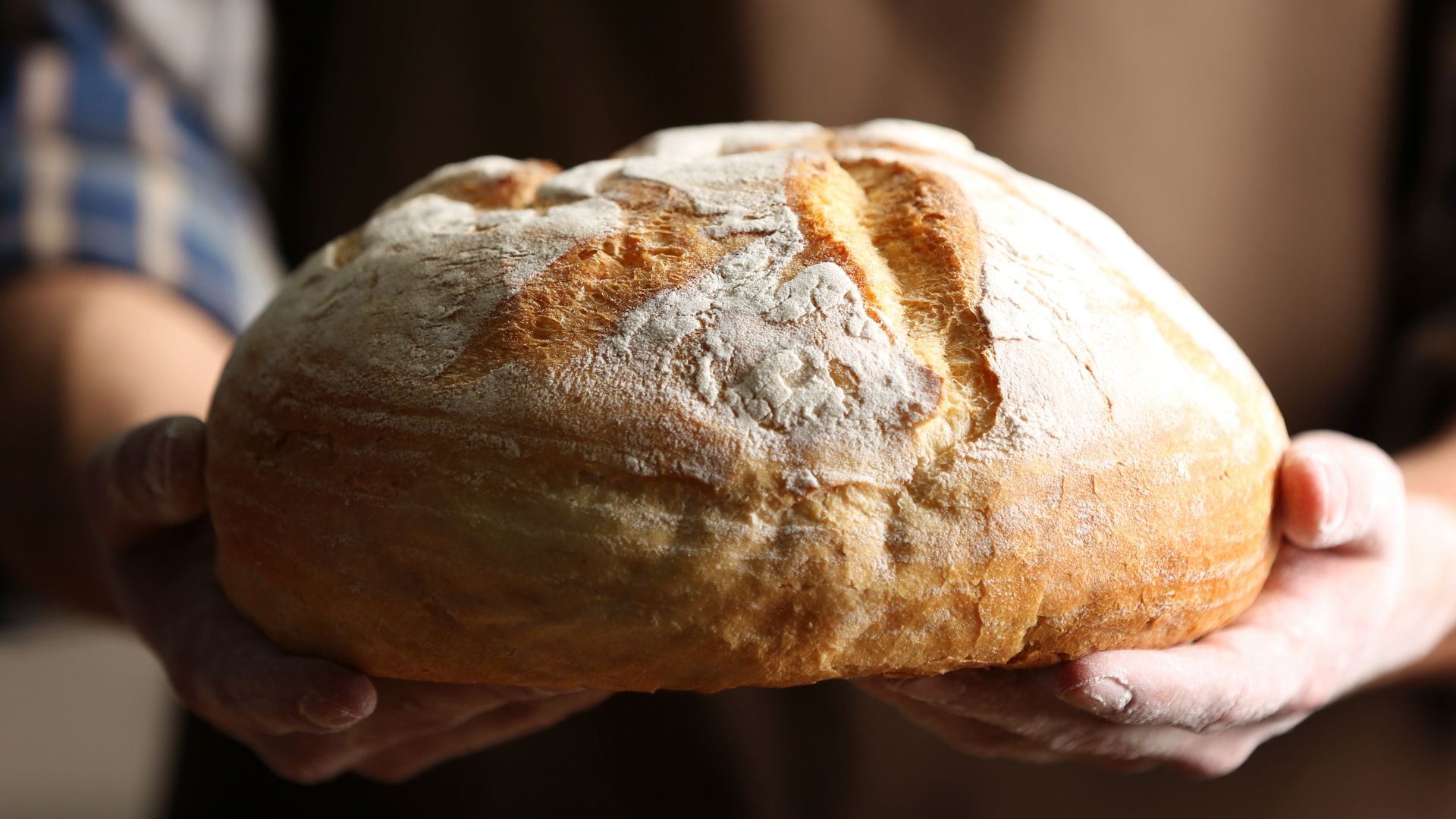
Last week, we heard Jesus invite us not to be consumed by worry. He reminded us that our heavenly Father knows what we need before we even ask. Our hope doesn’t rest in our ability to predict tomorrow but in the faithfulness of the God who is already there.
But trusting God becomes much more difficult when the future is uncertain.
Most of us don’t mind change when we choose it. We welcome a new grandchild, a new home, a new opportunity, or a long-awaited answer to prayer. But change we didn’t ask for – that’s different. A difficult diagnosis. Retirement. Children moving away. The loss of someone we love. A changing community. A changing church. Those moments can leave us wondering what comes next.
When the future feels uncertain, it is easy to look backward. We remember seasons that seemed simpler. We remember how things used to be. Sometimes the past begins to look safer than the future, even if it wasn’t.
That is not just our story. It has always been the story of God’s people.
We heard that story earlier in our reading from Exodus. Israel had been set free from slavery, yet before long they began looking back toward Egypt. Freedom had led them into a wilderness they had never expected, and suddenly the familiar past seemed more attractive than the unknown future.
The disciples in today’s Gospel find themselves in another wilderness. Thousands of people are gathered. The day is ending. The food is gone. The future, at least from their perspective, looks like there isn’t enough.
Two different stories. Two different generations. Yet they ask the same question: Can God really be trusted with what comes next?
As we just sang, “Open my eyes, that I may see.” Perhaps that is the prayer we need today. Because sometimes God doesn’t immediately change our circumstances. Sometimes God first opens our eyes to see God’s faithfulness already at work.
Matthew 14:13-21
Fear Looks Back
This is one of the best-known miracles in the Gospels. Many of us have heard it since we were children. Because it’s so familiar, we can easily miss the tension in the story.
Imagine standing there with the disciples. It has been a long day. The crowds have grown, evening is approaching, and everyone is far from home. There is no easy solution.
The disciples look at the situation and reach what seems like the only reasonable conclusion: “Send the crowds away so they can buy food for themselves.”
It’s a practical suggestion. But Jesus responds with words that must have left them speechless: “They don’t need to go away. You give them something to eat.”
The disciples look at what they have – five loaves, two fish, and thousands of hungry people. From their perspective, it simply isn’t enough.
We’ve all had moments like that. We look at what lies ahead, take inventory of our resources, and quietly conclude, There isn’t enough. Not enough time. Not enough certainty about the future.
That feeling isn’t unique to the disciples. It’s the same struggle we heard earlier in Exodus.
After God delivered Israel from slavery and led them into the wilderness, hunger set in, and fear began to reshape their memories. Suddenly Egypt didn’t seem so bad. They forgot the cruelty of slavery and remembered only the food they had eaten.
God Provides Daily Bread
The remarkable thing about Exodus is that God doesn’t respond to Israel’s fear with anger. God responds with provision. God says to Moses: “I am going to rain down bread from heaven for you.”
What an astonishing promise. The people have questioned God’s care and doubted God’s intentions. Yet God’s response is not condemnation. It is daily bread.
Notice how God chooses to provide. God doesn’t give them enough manna for years. God gives them enough for one day. Each morning they gather what they need. If they try to save it for tomorrow, it spoils.
Every sunrise becomes an invitation to trust. Will God be faithful today? And each day they discover the same answer: God is faithful.
There is a gentle wisdom here. We want God to remove all uncertainty. We want guarantees about tomorrow. Instead, God offers something better – God’s presence and enough grace for today.
Perhaps that is why Jesus taught his disciples to pray, “Give us this day our daily bread.” He wasn’t introducing a new idea. He was reminding God’s people that the God who fed Israel in the wilderness is the same God who still meets God’s people one day at a time.
That brings us back to the hillside where Jesus is surrounded by thousands of hungry people. The setting has changed. But the question has not.
Can God be trusted when there doesn’t seem to be enough?
Once again, God answers – not with an explanation, but with bread.
Jesus Sees Possibility
The disciples have seen Jesus heal the sick. They have watched the crowds gather. Now evening is coming, and they see only one responsible solution. “Send the crowds away.”
No one could blame them. They know exactly how much food they have – five loves, two fish and thousands of hungry people. The numbers simply don’t add up. The disciples aren’t lacking compassion. They’re lacking imagination. Their calculations are correct. Their conclusion is not. Because they’ve forgotten one thing. Jesus is standing right there.
N.T. Wright reminds us that this miracle is about far more than feeding hungry people. Jesus is revealing that God’s kingdom has arrived. In God’s kingdom, scarcity does not have the final word. God’s abundance breaks into ordinary life in ways no one expects.
That’s why Jesus doesn’t begin by asking, “What don’t you have?” Instead, he asks, “What do you have?” Five loaves. Two fish. It wasn’t much. But it was enough to place into the hands of Jesus.
That may be one of the hardest lessons for us to learn. We naturally focus on what we lack. Jesus invites us to notice what God has already placed in our hands.
Throughout Scripture, God has a habit of beginning with what seems too small – a shepherd’s staff, a widow’s jar of oil, a young boy’s lunch. Time and again, God uses ordinary gifts in extraordinary ways.
That’s where these stories meet our own. We may not be feeding five thousand people, but we know what it feels like to wonder if there will be enough.
The disciples looked at what they had and saw limits. Jesus looked at what they had and saw possibilities. The difference wasn’t simply the bread. The difference was placing what little they had into the hands of Jesus.
Trust Opens the Way Forward
This is where Christian Joy becomes different from ordinary optimism. Optimism depends on believing everything will work out the way we hope. Christian Joy depends on knowing the One who remains faithful whether life unfolds as we expect or not. Joy grows where trust grows.
So what does this mean for us?
Most of us don’t wake up wondering how we’re going to feed five thousand people. But we do wake up wondering about the future – our health, our families, our finances, and even the future of our church.
Those are real questions. Scripture never tells us to ignore them. It reminds us that our future is held by the God whose faithfulness has never failed.
Think about the stories we’ve heard today. Israel couldn’t see tomorrow’s manna. The disciples couldn’t see a meal for thousands. In both stories, God’s people saw what was missing. God saw what God’s grace could do through ordinary gifts placed in willing hands.
Perhaps that’s the invitation for us – not to deny the challenges ahead, but to remember that God’s faithfulness has always been greater than our fears.
Earlier we sang, “Great is Thy Faithfulness.” Notice what we don’t’ sing. We don’t sing, “Great is my confidence.” We don’t sing, “Great is my ability.” We don’t even sing “Great is my faith.” We sing, “Great is Thy Faithfulness.”
Our hope has never rested on the strength of our faith. It rests on the faithfulness of God. So instead of asking, “What if there isn’t enough?” perhaps we begin asking, “What has God already placed in our hands?”
One Faithful Next Step
This week, whenever you find yourself worrying about the future, I want to invite you to pause and ask two simple questions.
What has God already provided?
And…
What is the next faithful step? Not the next ten steps. Not next year. Just the next faithful step. That’s how Israel crossed the wilderness. That’s how the disciples learned to follow Jesus. And that’s how most of us discover God’s faithfulness – not all at once, but one day, one step, one act of trust at a time.
The God Who Goes Before Us
As we’ve traveled through this series together, we’ve been rediscovering Christian Joy. In the first week, we discovered that our joy begins because God delights in us. Last week, we discovered that the God who delights in us is also the God who cares for us.
Today we’ve discovered one more truth. The God who delights in us… the God who cares for us… is also the God who goes before us.
We do not know everything the future holds. But we know the One who has been faithful in every generation. The God who fed Israel in the wilderness. The God who fed the crowds beside the sea. The God who has carried this congregation through seasons of challenge and seasons of blessing. That same God is already waiting in tomorrow.
So we move into the future – not because we have all the answers, but because we know the heart of the One who leads us there.
And that is why Christian Joy can face an uncertain future with confidence. For our confidence is not in ourselves. Our confidence is in the God whose mercies are new every morning… whose compassion never fails, and whose faithfulness is and always will be great.
From Worry to Trust
19 Jul 2026 Leave a comment
in Devotions

Scripture: Matthew 6:25–34; Mark 10:13–16 (NRSVUE)
Last week, I began a new series by reflecting on one of the most beautiful promises in Scripture. Through the prophet Zephaniah, we discovered that our joy begins not with what we do for God, but with what God has already done for us.
Before we accomplish anything, before we prove ourselves worthy, before we check a single item off our to-do list, God delights in us. God rejoices over us with singing (Zephaniah 3:17).
That is wonderful news. But it also raises an honest question:
If God delights in me, why do I still worry so much?
Many of us lie awake at night worrying about our health, our families, our finances, or what tomorrow may bring. We worry about the things we can control—and even more about the things we can’t.
Jesus understood that about us. That is why, in the Sermon on the Mount (Matthew 6:25–34), he doesn’t begin by talking about our circumstances. He begins by talking about the character of God—a God who knows our needs, cares for creation, and values us even more than the birds of the air or the lilies of the field (Matthew 6:26–30).
Before Jesus points us toward the birds and flowers, however, another Gospel offers a beautiful picture of what trust looks like.
The Trust of a Child
In Mark 10:13–16, people bring their children to Jesus, hoping he will bless them. The disciples try to send them away, perhaps believing they are protecting Jesus’ time. But Jesus is indignant. He welcomes the children into his arms, blesses them, and then says something remarkable:
“Whoever does not receive the kingdom of God like a little child will never enter it.” (Mark 10:15)
For years I wondered what Jesus meant.
It isn’t that children understand everything about God. It isn’t that they always make good decisions. It is that children know how to receive. They don’t earn love or care. They simply receive what is freely given.
Perhaps that is the kind of trust Jesus invites us to discover—a trust that receives God’s love before trying to earn it.
The Heart of God
Children have a remarkable ability to trust those who love them. They don’t spend much time worrying about tomorrow because they assume someone will care for them.
As we grow older, life becomes more complicated. We experience disappointment, grief, and loss. We carry responsibilities children never have to consider. No wonder worry becomes such a familiar companion.
Jesus does not point to children because they are naïve. He points to them because they know how to receive.
That raises an important question. Why can Jesus invite us to trust like that?
Certainly not because life is always easy. Jesus knew suffering, grief, and the cross that awaited him.
He invites us to trust because he knows the heart of the One in whom we place our trust.
That is why Jesus says, “Look at the birds of the air… Consider the lilies of the field” (Matthew 6:26–29). He isn’t simply giving a lesson about nature. He is revealing the heart of God.
Every bird that is fed, every flower clothed in beauty, every gift of creation points to a God who knows, who sees, and who faithfully cares.
The Trust Jesus Lived
New Testament scholar N. T. Wright once asked, “Has it ever struck you what a basically happy person Jesus was?”
That observation has stayed with me.
Of course, Jesus experienced profound sorrow. He wept at the tomb of Lazarus (John 11:35). He agonized in Gethsemane (Matthew 26:36–46). He endured the cross (Luke 23:33–46).
But those moments are not the whole story.
Far more often we find Jesus sharing meals with friends, walking through the countryside, noticing birds and flowers, and receiving ordinary moments as gifts from God. Jesus moved through the world with a deep awareness of God’s goodness.
Perhaps that is why he could say, “Do not worry” (Matthew 6:25, 31, 34).
Jesus wasn’t asking his followers to do something he had never practiced himself. He trusted God’s care. He gave himself fully to the people in front of him, confident that tomorrow would also be held in God’s hands.
How often do we miss the gift of today because we’re already living in tomorrow? Before we’ve lived this day, we’ve already borrowed tomorrow’s burdens.
Jesus offers another way—not by pretending tomorrow doesn’t matter, but by trusting that the God who is with us today will also be with us tomorrow.
Borrowing Tomorrow’s Burdens
Jesus asks a question that is both simple and profound:
“And can any of you by worrying add a single hour to your span of life?” (Matthew 6:27)
It is a question worth sitting with.
Worry often feels productive. We convince ourselves that if we think about something long enough, somehow we’ll gain control.
But worry has limits.
It cannot change yesterday.
It cannot control tomorrow.
And it often steals the peace God intends for today.
Jesus isn’t dismissing our concerns. Notice what he mentions: food, drink, and clothing. These were not luxuries; they were life’s necessities (Matthew 6:25, 31–32).
Instead of minimizing those needs, Jesus points us toward something even more certain:
“Your heavenly Father knows that you need them all.” (Matthew 6:32)
What a remarkable promise.
Before we ever speak a prayer, before we find the right words, before tomorrow even arrives, God already knows. Tomorrow has not yet arrived for us, but it has never been beyond the reach of God.
Seeking First the Kingdom
Jesus then says:
“But strive first for the kingdom of God and his righteousness, and all these things will be given to you as well.” (Matthew 6:33)
At first glance, those words can sound like another assignment on an already crowded to-do list.
But notice the order.
Jesus first reminds us who God is. Your heavenly Father knows what you need (Matthew 6:32).
Only then does he invite us to seek God’s kingdom.
Seeking God’s kingdom doesn’t mean trying harder to earn God’s care. It means refusing to build our lives around fear. It means allowing God’s reign—not anxiety—to shape our priorities.
When we trust God’s faithfulness, we become free to love God and our neighbors instead of being consumed by our fears.
Isn’t that the kind of life we long for?
Not a life without responsibilities.
Not a life without challenges.
But a life that isn’t constantly pulled away from the present by fear of the future.
Practicing Trust
Rather than trying to “worry less” this week, I invite you to practice trust.
Each day, take a few moments to notice one sign of God’s faithful care.
Watch the birds in your backyard.
Notice flowers blooming along the roadside.
Sit quietly with a grandchild.
Or begin your morning with this simple prayer:
“God, today I trust that you are already here before I arrive.”
It is a simple prayer, but it reminds us that wherever this day leads, we never walk into it alone.
As we practice this habit, the Holy Spirit gradually teaches our hearts to trust what we already know in our minds: God is faithful.
The God Who Delights in You Is the God You Can Trust
The beloved hymn reminds us:
“His eye is on the sparrow, and I know he watches me.”
Those words have comforted generations of Christians—not because they promise a life without hardship, but because they remind us that we are never forgotten.
If God’s eye is on the sparrow (Matthew 6:26), how much more is God’s heart turned toward you?
That is the promise at the heart of Jesus’ teaching.
Tomorrow may bring challenges. Jesus never promised otherwise. In fact, he acknowledged that each day has enough trouble of its own (Matthew 6:34).
But there will never be a day when God is absent.
Last week we heard that God delights in us (Zephaniah 3:17). This week Jesus reminds us that the God who delights in us also cares for us. The One who rejoices over us with singing is the same One who knows our needs before we even ask (Matthew 6:32).
Our hope is not found in having enough faith to eliminate every anxious thought.
Our hope is found in the faithfulness of God.
So when worry begins to whisper this week, remember the children gathered safely in Jesus’ arms (Mark 10:13–16). Remember the birds of the air (Matthew 6:26). Remember the lilies of the field (Matthew 6:28–30).
And remember this:
Before tomorrow arrives for you, God is already there.
Trust doesn’t mean we stop planning for tomorrow. It simply means tomorrow no longer has the power to rule today.
The God who delights in you is the God you can trust.
The Name Above Every Name: Resting in God’s Delight
12 Jul 2026 Leave a comment
in Devotions

There really is something about the name of Jesus.
For generations, Christians have found peace, hope, and comfort in that name. As the apostle Paul wrote, God has given Jesus “the name that is above every name” (Philippians 2:9-11). The name of Jesus reminds us that God has come near, that love has taken on flesh, and that we are never beyond God’s reach.
Many people believe that God loves them, yet quietly wonder if God is actually pleased with them.
Have I done enough?
Have I prayed enough?
Have I served enough?
Have I been faithful enough?
Our culture constantly tells us that our worth is measured by what we accomplish. Productivity becomes the measure of value. Even within the church, it can be easy to assume that God smiles when we’re successful and is disappointed when we fall short.
But Scripture tells a different story.
A God Who Delights in God’s People
One of the most beautiful descriptions of God’s heart appears in Zephaniah 3:17:
“The Lord, your God, is in your midst… He will create calm with his love; he will rejoice over you with singing.” (CEB)
Throughout the Bible we hear that God loves us, forgives us, and remains faithful. Zephaniah goes even further. God doesn’t simply love God’s people—God delights in them. God rejoices over them. God even sings over them.
Think of a grandparent watching a toddler take those first uncertain steps.
The child isn’t walking perfectly. They wobble. They stumble. They may even fall before reaching the other side of the room. But no one is grading the performance. No one expects perfection. The grandparent smiles, cheers, and celebrates simply because that child is deeply loved.
That image comes remarkably close to what Zephaniah describes.
God does not merely tolerate us.
God delights in us.
Grace Before Performance
That may not be the picture many people carry in their hearts.
Some imagine God with folded arms, disappointed, waiting for them to finally get everything right. We assume God is keeping score, measuring our faithfulness by how much we accomplish, how often we pray, or how many mistakes we’ve managed to avoid.
But Zephaniah tells another story.
The prophet spoke to the people of Judah during one of the darkest seasons in their history. They had wandered from God, neglected justice, and broken the covenant. Much of Zephaniah contains words of warning, yet judgment is not the final word.
By chapter 3, God’s promises are filled with restoration, forgiveness, and hope.
Before sending God’s people back into the world to live differently, God reminds them who they already are: God’s beloved.
The same pattern appears throughout Scripture.
Before Israel received the Law, God first rescued them from Egypt (Exodus 20:2).
Before the disciples were sent into ministry, Jesus called them to simply be with him (Mark 3:13-14).
Before we accomplish anything for God, we are embraced by grace. As Paul reminds us, “God proves his love for us in that while we still were sinners Christ died for us” (Romans 5:8).
Christian joy begins not with what we do for God, but with what God has already done for us.
Remembering God’s Faithfulness
Psalm 126 echoes this same truth.
The psalm begins by remembering God’s past faithfulness:
“When the Lord changed Zion’s circumstances for the better, it was like we had been dreaming.” (Psalm 126:1)
The people recall laughter, joy, and restoration. Even the surrounding nations noticed God’s work and declared:
“The Lord has done great things for them.” (Psalm 126:2)
The people answered:
“Yes, the Lord has done great things for us, and we are overjoyed.” (Psalm 126:3)
Notice where their joy begins.
Not with their accomplishments.
Not with their faithfulness.
It begins by remembering God’s faithfulness.
That remains true today.
When we focus only on unfinished tasks, joy quickly fades. There is always another responsibility waiting. Another deadline. Another problem to solve.
But gratitude changes our perspective.
When we remember answered prayers, unexpected blessings, moments of strength, or people through whom God has shown love, we begin to recognize God’s presence again.
Psalm 126 doesn’t pretend life is perfect. Just a few verses later, the people pray for continued restoration. Their circumstances were still difficult.
Yet they refused to let present struggles erase the memory of God’s goodness.
Learning to Receive
If God delights in us before we accomplish anything, perhaps one of the greatest spiritual disciplines is learning to receive.
That can be surprisingly difficult.
Many of us are far better at doing than receiving. We stay busy. We solve problems. We care for others. Even our faith can become another list of responsibilities.
Bible studies.
Volunteer opportunities.
Committee meetings.
Acts of service.
These are all good things. They are important expressions of discipleship.
But they are not what makes God delight in us.
James reminds us that “every good gift, every perfect gift, comes from above” (James 1:17). Sometimes one of the most faithful things we can do is simply receive those gifts with gratitude.
Notice the beauty of creation.
Enjoy the laughter of a child.
Listen to a hymn that stirs your soul.
Share a meal with people you love.
Watch a sunset.
Sit quietly on a porch as evening settles in.
These moments are not distractions from the spiritual life.
They are reminders of the God who delights in giving good gifts.
Living from Belovedness
Knowing we are loved changes how we live.
When we no longer have to earn God’s approval, we become free to love others without keeping score. We become more attentive to those who are overlooked, more generous with compassion, and more willing to extend the same grace we have received.
Jesus summarized the Christian life this way:
“Love the Lord your God with all your heart… and love your neighbor as yourself.” (Matthew 22:37-39)
That kind of love grows most naturally in hearts that have first learned they are deeply loved.
The apostle John puts it simply:
“We love because God first loved us.” (1 John 4:19)
Resting in God’s Delight
The name of Jesus reveals the very heart of God.
In Jesus we meet the God Zephaniah described—the God who is present among God’s people, who calms fearful hearts with love, and who rejoices over them with singing.
Our joy is not built on having done enough.
Our joy is not rooted in flawless faith or perfect obedience.
Our joy rests in the good news that we are already loved.
Psalm 126 reminds us, “The Lord has done great things for us.”
Zephaniah tells us that God rejoices over us with singing.
Together they offer a beautiful invitation: remember what God has done, and rest in who God says you are.
When the week becomes busy, when responsibilities pile up, and when that familiar voice whispers that you haven’t done enough, remember this:
Before you accomplished anything…
Before you solved a problem…
Before you crossed another task off your list…
You were already God’s beloved.
Receive that gift.
Rest in that love.
And may the joy of knowing you are loved overflow into every part of your life, so that others, too, may see that “the Lord has done great things.”
Everyone Matters: What a Camp Lesson Taught Me About the Heart of God
05 Jul 2026 Leave a comment
in Devotions

Years ago, I had the opportunity to work at Camp Wesley Woods. During the school year, I was part of the camp’s environmental education program. Schools would bring students for outdoor learning experiences, and my job was to lead groups on hikes and nature explorations.
One lesson every group leader learns quickly is this: you count children constantly.
You count before you leave. You count when you reach the trailhead. You count every time you stop. You count again when you arrive at your destination.
Why? Because it isn’t enough to know where you’re going. You want to make sure no one has been left behind.
You count because every child matters.
That simple practice has stayed with me over the years because it reflects something much deeper about the way God sees people. Scripture consistently reminds us that we are never just faces in a crowd. Every person is known, loved, and valued by God.
The Shepherd Who Knows Us
Jesus describes that kind of care in one of the most comforting images found in Scripture:
“I am the good shepherd. I know my own and my own know me.” (John 10:14, NRSVUE)
Those words speak to one of the deepest longings of the human heart: the desire to be truly known.
Our world offers countless ways to stay connected, yet many people still experience profound loneliness. People may know our names, see our social media posts, or recognize our faces, but very few truly know our fears, our hopes, our struggles, and our dreams.
Jesus does.
The Good Shepherd knows every part of our story—and still calls us by name.
Throughout the Gospels, Jesus demonstrates this personal love again and again. He notices those others overlook. He welcomes children (Mark 10:13-16). He eats with people society rejects (Luke 19:1-10). He seeks the one who has wandered away, telling the story of a shepherd who leaves ninety-nine sheep to search for the one that is lost (Luke 15:3-7).
The message is unmistakable:
Everyone matters to God.
Love That Stays
Jesus goes even further when He says,
“The good shepherd lays down his life for the sheep.” (John 10:11)
Ancient shepherds risked their lives protecting their flocks, but Jesus points to an even greater sacrifice. Unlike a hired hand who runs away when danger comes, the Good Shepherd stays.
Those words find their fullest meaning at the cross.
Jesus does not abandon humanity in its brokenness. Instead, God enters into our suffering, bears our sin, and offers redemption through self-giving love.
Romans 5:8 reminds us,
“But God proves his love for us in that while we still were sinners Christ died for us.”
The love of Christ is not conditional. It doesn’t depend on our success, our goodness, or our ability to earn it.
It simply stays.
Resurrection Begins Now
A few chapters later in John’s Gospel, Jesus stands outside the tomb of His friend Lazarus. Martha is grieving the loss of her brother, convinced that hope has already slipped away.
It is there—in the middle of sorrow—that Jesus makes one of Scripture’s greatest declarations:
“I am the resurrection and the life. Those who believe in me, even though they die, will live.” (John 11:25)
Many people think of resurrection only as something that happens after death. Certainly, Jesus promises eternal life. That is the foundation of Christian hope.
But notice when Jesus speaks these words.
Not after everything has been fixed.
Not after the miracle.
Before.
In the middle of grief.
That reminds us that resurrection is not only God’s future promise; it is also God’s present work.
Christ still brings hope where there is despair.
Christ still offers forgiveness where there is guilt.
Christ still brings peace into anxious hearts.
Christ still gives purpose to people who feel lost.
The resurrection power of God is already at work, bringing new life wherever Christ is welcomed.
As Paul writes,
“If anyone is in Christ, there is a new creation: everything old has passed away; see, everything has become new!” (2 Corinthians 5:17)
A Place to Belong
One of the beautiful things about Christian camp is that many children and youth discover this truth in tangible ways.
Some arrive excited.
Others come nervous.
Some wonder if they’ll make friends.
Some carry burdens no one else can see.
Over the course of a few days, many begin to discover something life-changing: I belong. I matter. I am loved.
Of course, camp itself doesn’t change lives.
Christ does.
Camp simply creates space where people can encounter the love of Jesus, often through caring adults, authentic friendships, worship, and time spent in God’s creation.
The same is true of every healthy Christian community.
The Church is called to become a place where people experience the heart of the Good Shepherd—a place where they are welcomed, known, encouraged, and reminded that they are deeply loved by God.
The Shepherd Still Calls Our Names
That lesson I learned years ago while leading children through the woods still reminds me of an even greater truth.
We counted because every child mattered.
God doesn’t simply count us.
God knows us.
The Good Shepherd has never lost sight of you. Whatever you’re carrying today—fear, uncertainty, grief, loneliness, or questions about the future—Jesus knows your name.
The Shepherd still calls people by name.
The Shepherd still searches for those who feel lost.
The Shepherd still lays down His life in love.
The Shepherd still leads people into abundant life (John 10:10).
And because Jesus is “the resurrection and the life,” hope always has the final word.


