What it means to be human in a vast and fragile world
It’s one thing to say, “I believe.”
It’s another to ask what, exactly, we are trusting in.
For many people today, belief is less about certainty and more about trust—trust that grows over time, makes room for questions, and is rooted in relationship. But if belief is trust, then it needs direction. It needs something—or someone—to rest in.
The ancient Christian creed begins simply:
“I believe in God, the Father Almighty, creator of heaven and earth.”
Before anything else is said about God—before expectations, before rules, before even salvation—there is this: God is Creator.
A Story That Begins With Life
The Bible opens not with explanation, but with action:
“In the beginning… God said, ‘Let there be light,’ and there was light” (Genesis 1:1–3).
Light breaks into darkness.
Order emerges from chaos.
Life unfolds in abundance.
Again and again, the rhythm repeats:
“God saw that it was good” (Genesis 1:4, 10, 12, 18, 21, 25).
At the center of this creation is humanity:
“So God created humankind in his image” (Genesis 1:27).
From the very beginning, human beings are given dignity—not something earned, but something given.
And yet, standing in a world this vast, a question naturally rises:
What does it mean to be part of something so immense—and still matter within it?
The Tension We All Live In
Psalm 8 gives voice to that question:
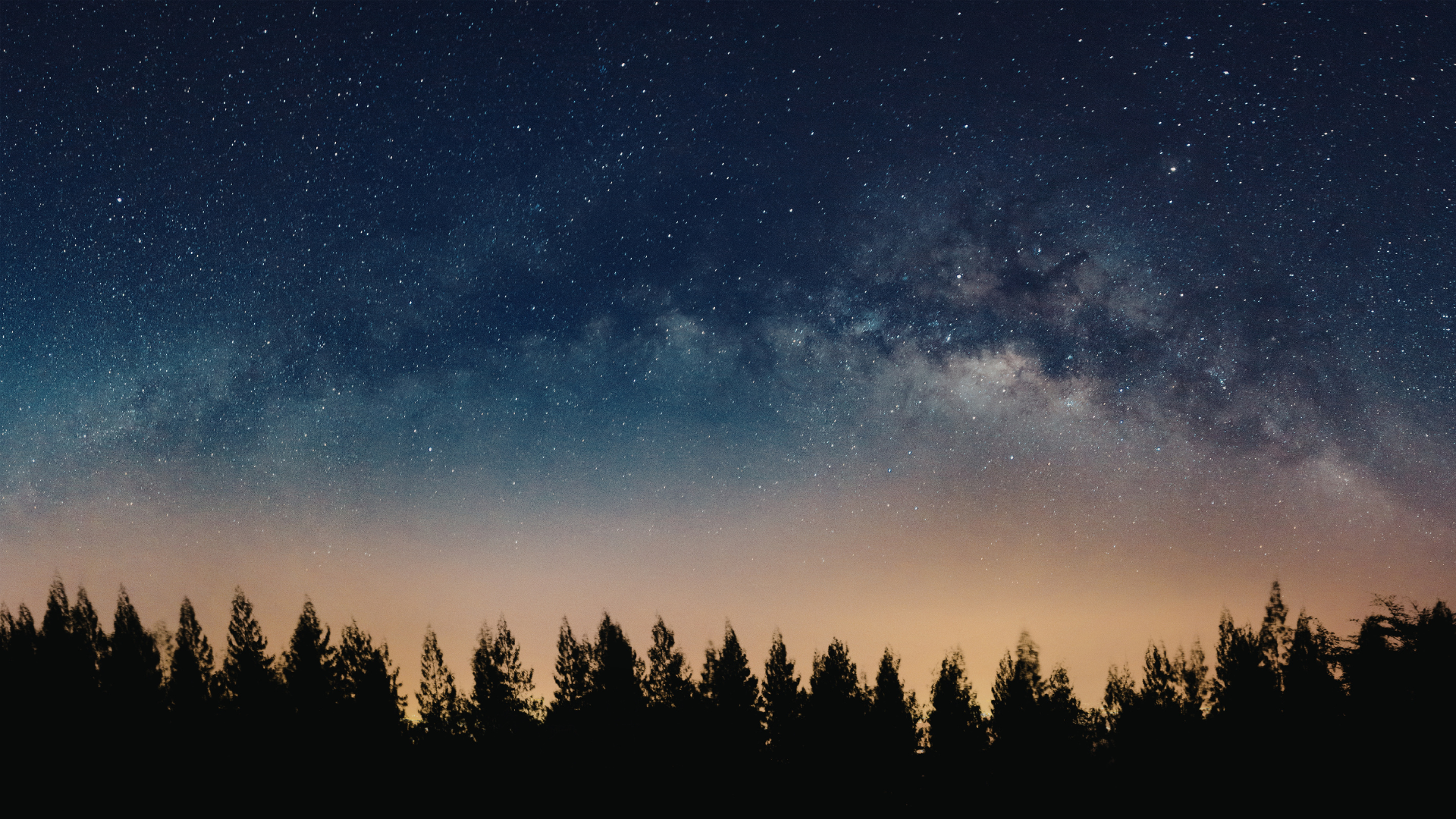
“When I look at your heavens… the moon and the stars…
what are human beings that you are mindful of them?” (Psalm 8:3–4)
It’s not really a question seeking an answer.
It’s a moment of wonder.
We are small—astonishingly small—in a universe that stretches beyond comprehension.
And yet…
“You have crowned them with glory and honor” (Psalm 8:5).
We are seen.
We are known.
We matter.
Both things are true at the same time:
- We are not the center of everything
- And we are not forgotten within it
Faith begins to take shape right there—in that tension between smallness and significance.
A Dignity We Do Not Earn
This idea of being made in the “image of God” (Genesis 1:27) is deepened in Psalm 8.
We are “crowned with glory and honor”—not because of what we achieve, but because of who God is.
That means:
- Our worth is not based on success or failure
- It does not rise or fall with circumstances
- It cannot be given or taken away by others
Before we do anything…
before we prove anything…
before we become anything…
We are already created, known, and valued.
Where We Lose Our Way
But we rarely hold this balance well.
We tend to drift toward one of two extremes:
1. Forgetting our smallness
We begin to live as if everything exists for us.
Creation becomes something to use, control, or consume.
This leads to exploitation—of the earth, of resources, even of people.
2. Forgetting our dignity
We start to believe worth must be earned.
That some lives matter more than others.
This leads to exclusion, injustice, and harm.
Scripture refuses both distortions.
Instead, it holds both truths together:
- We are small… and we are crowned
- We are not the center… and we are deeply valued
From Identity to Responsibility
Psalm 8 continues:
“You have given them dominion over the works of your hands” (Psalm 8:6).
That word—dominion—has often been misunderstood.
It doesn’t mean domination.
It doesn’t mean ownership.
It means stewardship.
To be human is not just to exist—it is to be entrusted.
Creation is not something we own.
It is something placed into our care.
Living as Image-Bearers
If we take this seriously, it reshapes how we live in two directions:
1. How we treat the earth
Caring for creation is not just environmental—it is spiritual.
The world is not disposable.
It is sacred.
To care for it is to honor the One who made it.
2. How we treat one another
Every person carries God-given dignity.
“So God created humankind in his image…” (Genesis 1:27)
That dignity is not ours to measure or withhold.
It does not depend on:
- background
- belief
- behavior
- status
Every interaction matters—because every person reflects their Creator.
Grace Comes First
Long before we respond to God, God is already at work.
Scripture reminds us:
“We love because he first loved us” (1 John 4:19)
Life itself is a gift given before it is earned.
Breath is given before it is deserved.
Even the world around us is an expression of grace.
This means:
- We don’t earn our worth
- We awaken to it
The God Who Still Sustains
Creation is not just something that happened once.
“In him we live and move and have our being” (Acts 17:28)
The God who creates is also the God who sustains.
Even now:
- Life continues
- Breath continues
- Creation continues
And in a world that often feels fragile or uncertain, this matters.
God has not stepped away.
Life Out of Death
This is where the message of Easter comes into focus.
The God of creation is also the God of resurrection.
“He is not here; he has risen” (Luke 24:6)
In the beginning, God brings life out of nothing.
In the resurrection, God brings life out of death.
Both are acts of creation.
Both are acts of grace.
What This Means for Us
If all of this is true, then our lives are shaped by three simple truths:
- We are created — we belong to something larger than ourselves
- We are known — our lives carry inherent worth
- We are called — to care for creation and for one another
In a world that often pulls us toward extremes—either self-importance or self-doubt—this vision offers something better:
A life grounded in humility
A life rooted in dignity
A life shaped by care
Not because we have to prove ourselves—
but because we already belong.


