Almost every life eventually produces the same quiet sentence:
“If we could just go back…”
Back before the diagnosis.
Back before the conflict.
Back before everything changed.
Memory has a way of polishing the past. Seasons that once felt ordinary begin to look golden in hindsight. Gratitude slowly turns into longing, and longing into the hope that somehow we might return to the way things were.
The Bible knows that impulse well.
In Isaiah 43, God speaks to people whose world had been turned upside down. Stability was gone. The future was uncertain. The past felt safer than the road ahead.
Into that moment God says:
“Thus says the Lord,
who makes a way in the sea,
a path in the mighty waters…
Do not remember the former things,
or consider the things of old.
I am about to do a new thing;
now it springs forth, do you not perceive it?”
— Isaiah 43:16, 18–19
Those words land with both comfort and disruption.
Comfort, because God reminds the people who God is — the One who once made a path through the sea (Exodus 14). The One who has been faithful before.
Disruption, because God also says: Do not cling to the past. I am doing something new.
Not because the past did not matter. But because remembering can quietly become clinging.
And sometimes what we call faith is really just a wish to rewind.
That phrase — “a new thing” — lands differently depending on where one stands.
For some, it sounds like hope. A way forward. A future not trapped by what has been.
For others, it sounds like loss. Because the “former things” were not just history — they were home. The season when life made sense. When the church felt fuller. When the family table was intact. When grief had not yet entered the room.
Faith communities know this tension well. But so do families, organizations, and individuals. The longing is familiar:
If we could just go back…
Back before the diagnosis.
Back before the conflict.
Back before the disruption that changed everything.
That longing grows out of love and gratitude for seasons that mattered. But Scripture gently reminds us of a difficult truth:
The present will never be the past.
Even when something is rebuilt, it is not the same. Even when something returns, it returns changed. Even when a temple is rebuilt, the people rebuilding it are not who they once were.
And that is exactly where the book of Ezra meets us.
When the Past and Future Collide
Ezra 3:10–13
To understand the moment in Ezra 3, it helps to remember the long road behind it.
Israel had once demanded a king (1 Samuel 8). Kings rose and kings fell. Some were faithful; many were not. Power shifted. Idolatry crept in. Prophetic warnings were ignored.
Eventually the unthinkable happened.
Jerusalem was destroyed.
The temple was torn down.
The people were carried into exile in Babylon (2 Kings 25).
For decades they lived in a foreign land, learning to pray without a temple and hope without a king (Psalm 137).
Then, slowly, a return.
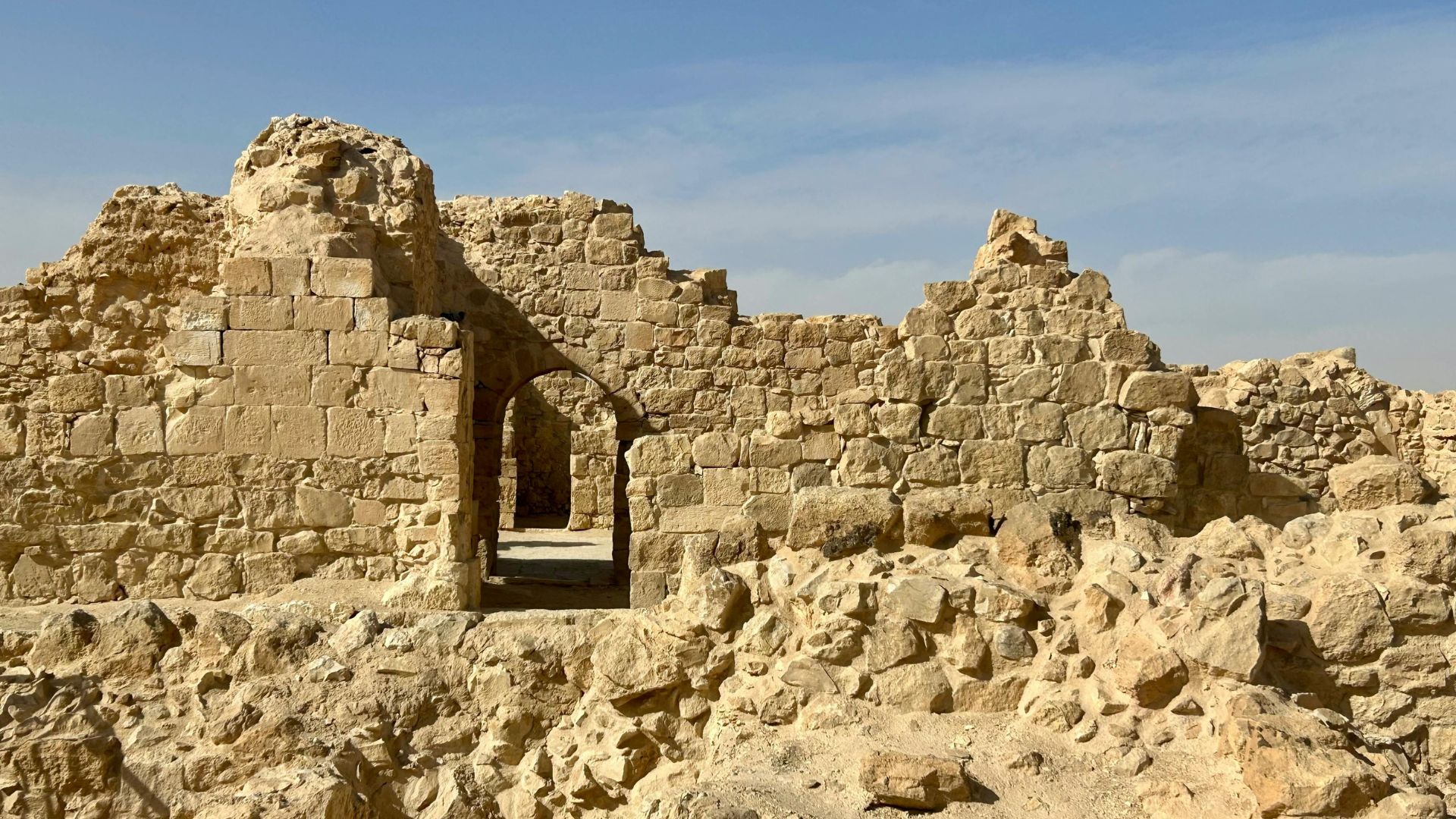
A remnant came back to Jerusalem (Ezra 1–2). Not a triumphal parade — a remnant. They came home to rubble. Broken walls. Overgrown streets.
And they began again.
In Ezra 3, they lay the foundation of a new temple. Not the finished building — just the foundation.
The priests stand with trumpets.
The Levites hold cymbals.
The people sing:
“For he is good, for his steadfast love endures forever toward Israel.”
— Ezra 3:11
The people shout in praise.
But then Ezra tells us something remarkable.
Many of the older priests and elders — those who had seen Solomon’s temple before it was destroyed — weep loudly (Ezra 3:12).
The sound of weeping and shouting rises together so loudly that no one can tell which is which (Ezra 3:13).
Is it rejoicing?
Or grief?
Both.
The older generation remembers the glory of the first temple. The new foundation seems smaller, simpler, less impressive.
For some: joy.
For others: loss.
Scripture does not silence either response. Both emotions are present in the same worship service. Both are held inside the same refrain:
“For he is good, for his steadfast love endures forever.”
That refrain is the theological center of the passage. Not the building. Not nostalgia. Not disappointment.
God’s steadfast love.
The Temptation to Go Back
There are moments in every life when a quiet thought slips into prayer:
If we could just go back…
Back to when life felt simpler.
Back to when the future seemed clearer.
Back to when certainty felt stronger.
That instinct is deeply human. But Ezra shows something important:
There is no going back.
But there is something worth rebuilding.
The returning exiles cannot recover pre-exile innocence. But they can rebuild worship. They can restore covenant life. They can begin again.
And that tension still shapes communities today.
Some people carry long memory — stories of how things once were. Those memories matter. They testify to seasons of faithfulness.
Others enter the story later. They bring fresh eyes, new imagination, and energy not shaped by comparison to the past.
Healthy communities hold both.
Some carry memory.
Some carry imagination.
Some carry both.
Sometimes conversations in communities sound like Ezra 3 — rejoicing and weeping rising at the same time.
And perhaps that is not dysfunction.
Perhaps it is simply what faithfulness sounds like.
Isaiah’s Necessary Word
Into that swirl of memory and emotion, Isaiah speaks again:
“Do not remember the former things…
I am about to do a new thing;
now it springs forth, do you not perceive it?”
— Isaiah 43:18–19
Isaiah is not commanding amnesia. Throughout Scripture, Israel is told to remember God’s faithfulness (Deuteronomy 8:2).
But Isaiah warns against idolizing the past.
There is a difference between remembering what God has done and demanding that God repeat it in exactly the same way.
The Red Sea will not be reenacted.
The wilderness will not be reversed.
The temple will not be replicated.
God is doing a new thing.
The question is not whether God is active.
The question is whether we perceive it.
What Matters Most
In Ezra 3, people respond differently because perspective is relative.
To the younger generation, the new foundation is hope.
To the older generation, it is a reminder of loss.
Both are understandable. Both are real.
But verse 11 recenters everyone:
“For he is good, for his steadfast love endures forever.”
That refrain relativizes everything else.
Buildings matter.
Ministries matter.
Transitions matter.
But they are not ultimate.
God’s covenant love is ultimate.
That love held Israel before the exile, during the exile, and after the exile.
And it holds communities — and individuals — through every season of change.
The Question Beneath the Change
Every community eventually faces its own version of “rebuilding the temple.”
A beloved ministry ends.
Leadership changes.
A building is renovated or repurposed.
A season closes that no one expected to lose.
And someone quietly thinks:
If we could just go back…
But Scripture invites a different question.
Not How do we go back?
But Where is God now?
Where is God in the transition?
Where is God in the grief?
Where is God in the unexpected possibility?
If God’s steadfast love truly endures forever, then there is no moment from which God is absent.
Holding the Emotions of Faith
The story in Ezra also gives permission for something many people need to hear:
Faith does not eliminate complicated emotions.
Joy and grief can exist together.
Hope and nostalgia can sit in the same sanctuary.
Confidence and uncertainty can share the same prayer.
The people in Ezra worship while both weeping and rejoicing.
And over both emotions they sing the same truth:
“For he is good, for his steadfast love endures forever.”
That refrain becomes a kind of spiritual anchor.
When nostalgia overwhelms:
God is good.
When uncertainty unsettles:
God’s steadfast love endures forever.
When hope feels fragile:
God’s steadfast love endures forever.
Still on the Way
Scripture consistently reminds us that faith is rarely about arrival.
The wilderness generation learned that freedom required staying close to God day by day (Exodus 16–17).
Paul later described faith as pressing forward rather than possessing the finish line (Philippians 3:12–14).
The psalms remind us not to anchor hope in human power but in God’s enduring reign (Psalm 146:3–5).
And Isaiah adds another layer of truth:
God is already ahead of us, doing a new thing.
There is no going back — not because the past was meaningless, but because God’s work is not finished.
We may not be where we hoped to be.
But we are not abandoned.
Not in exile.
Not in rebuilding.
Not in transition.
The same God who parted the sea (Exodus 14), met Moses on the mountain (Exodus 19), outlasted every king (Psalm 146), and brought the exiles home (Ezra 1) is still at work.
And because God is good, and God’s steadfast love endures forever, we can grieve.
We can rejoice.
We can rebuild.
We can move forward.
There is no going back.
But there is always grace for the next step.

 Pieces of the Puzzle