When Faith Wants to Go Back
15 Mar 2026 Leave a comment
in Devotions
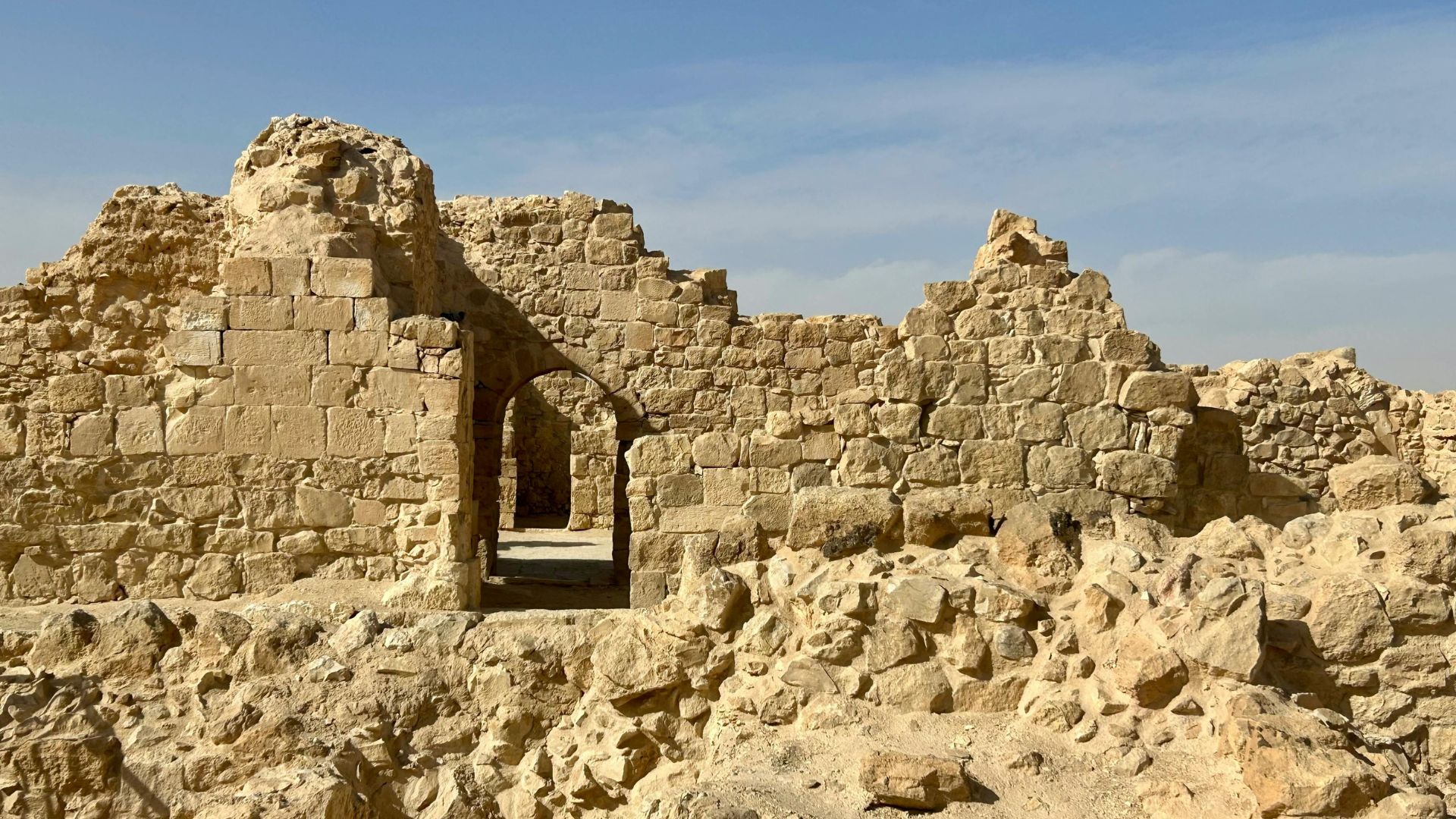
Almost every life eventually produces the same quiet sentence:
“If we could just go back…”
Back before the diagnosis.
Back before the conflict.
Back before everything changed.
Memory has a way of polishing the past. Seasons that once felt ordinary begin to look golden in hindsight. Gratitude slowly turns into longing, and longing into the hope that somehow we might return to the way things were.
The Bible knows that impulse well.
In Isaiah 43, God speaks to people whose world had been turned upside down. Stability was gone. The future was uncertain. The past felt safer than the road ahead.
Into that moment God says:
“Thus says the Lord,
who makes a way in the sea,
a path in the mighty waters…
Do not remember the former things,
or consider the things of old.
I am about to do a new thing;
now it springs forth, do you not perceive it?”
— Isaiah 43:16, 18–19
Those words land with both comfort and disruption.
Comfort, because God reminds the people who God is — the One who once made a path through the sea (Exodus 14). The One who has been faithful before.
Disruption, because God also says: Do not cling to the past. I am doing something new.
Not because the past did not matter. But because remembering can quietly become clinging.
And sometimes what we call faith is really just a wish to rewind.
That phrase — “a new thing” — lands differently depending on where one stands.
For some, it sounds like hope. A way forward. A future not trapped by what has been.
For others, it sounds like loss. Because the “former things” were not just history — they were home. The season when life made sense. When the church felt fuller. When the family table was intact. When grief had not yet entered the room.
Faith communities know this tension well. But so do families, organizations, and individuals. The longing is familiar:
If we could just go back…
Back before the diagnosis.
Back before the conflict.
Back before the disruption that changed everything.
That longing grows out of love and gratitude for seasons that mattered. But Scripture gently reminds us of a difficult truth:
The present will never be the past.
Even when something is rebuilt, it is not the same. Even when something returns, it returns changed. Even when a temple is rebuilt, the people rebuilding it are not who they once were.
And that is exactly where the book of Ezra meets us.
When the Past and Future Collide
Ezra 3:10–13
To understand the moment in Ezra 3, it helps to remember the long road behind it.
Israel had once demanded a king (1 Samuel 8). Kings rose and kings fell. Some were faithful; many were not. Power shifted. Idolatry crept in. Prophetic warnings were ignored.
Eventually the unthinkable happened.
Jerusalem was destroyed.
The temple was torn down.
The people were carried into exile in Babylon (2 Kings 25).
For decades they lived in a foreign land, learning to pray without a temple and hope without a king (Psalm 137).
Then, slowly, a return.
A remnant came back to Jerusalem (Ezra 1–2). Not a triumphal parade — a remnant. They came home to rubble. Broken walls. Overgrown streets.
And they began again.
In Ezra 3, they lay the foundation of a new temple. Not the finished building — just the foundation.
The priests stand with trumpets.
The Levites hold cymbals.
The people sing:
“For he is good, for his steadfast love endures forever toward Israel.”
— Ezra 3:11
The people shout in praise.
But then Ezra tells us something remarkable.
Many of the older priests and elders — those who had seen Solomon’s temple before it was destroyed — weep loudly (Ezra 3:12).
The sound of weeping and shouting rises together so loudly that no one can tell which is which (Ezra 3:13).
Is it rejoicing?
Or grief?
Both.
The older generation remembers the glory of the first temple. The new foundation seems smaller, simpler, less impressive.
For some: joy.
For others: loss.
Scripture does not silence either response. Both emotions are present in the same worship service. Both are held inside the same refrain:
“For he is good, for his steadfast love endures forever.”
That refrain is the theological center of the passage. Not the building. Not nostalgia. Not disappointment.
God’s steadfast love.
The Temptation to Go Back
There are moments in every life when a quiet thought slips into prayer:
If we could just go back…
Back to when life felt simpler.
Back to when the future seemed clearer.
Back to when certainty felt stronger.
That instinct is deeply human. But Ezra shows something important:
There is no going back.
But there is something worth rebuilding.
The returning exiles cannot recover pre-exile innocence. But they can rebuild worship. They can restore covenant life. They can begin again.
And that tension still shapes communities today.
Some people carry long memory — stories of how things once were. Those memories matter. They testify to seasons of faithfulness.
Others enter the story later. They bring fresh eyes, new imagination, and energy not shaped by comparison to the past.
Healthy communities hold both.
Some carry memory.
Some carry imagination.
Some carry both.
Sometimes conversations in communities sound like Ezra 3 — rejoicing and weeping rising at the same time.
And perhaps that is not dysfunction.
Perhaps it is simply what faithfulness sounds like.
Isaiah’s Necessary Word
Into that swirl of memory and emotion, Isaiah speaks again:
“Do not remember the former things…
I am about to do a new thing;
now it springs forth, do you not perceive it?”
— Isaiah 43:18–19
Isaiah is not commanding amnesia. Throughout Scripture, Israel is told to remember God’s faithfulness (Deuteronomy 8:2).
But Isaiah warns against idolizing the past.
There is a difference between remembering what God has done and demanding that God repeat it in exactly the same way.
The Red Sea will not be reenacted.
The wilderness will not be reversed.
The temple will not be replicated.
God is doing a new thing.
The question is not whether God is active.
The question is whether we perceive it.
What Matters Most
In Ezra 3, people respond differently because perspective is relative.
To the younger generation, the new foundation is hope.
To the older generation, it is a reminder of loss.
Both are understandable. Both are real.
But verse 11 recenters everyone:
“For he is good, for his steadfast love endures forever.”
That refrain relativizes everything else.
Buildings matter.
Ministries matter.
Transitions matter.
But they are not ultimate.
God’s covenant love is ultimate.
That love held Israel before the exile, during the exile, and after the exile.
And it holds communities — and individuals — through every season of change.
The Question Beneath the Change
Every community eventually faces its own version of “rebuilding the temple.”
A beloved ministry ends.
Leadership changes.
A building is renovated or repurposed.
A season closes that no one expected to lose.
And someone quietly thinks:
If we could just go back…
But Scripture invites a different question.
Not How do we go back?
But Where is God now?
Where is God in the transition?
Where is God in the grief?
Where is God in the unexpected possibility?
If God’s steadfast love truly endures forever, then there is no moment from which God is absent.
Holding the Emotions of Faith
The story in Ezra also gives permission for something many people need to hear:
Faith does not eliminate complicated emotions.
Joy and grief can exist together.
Hope and nostalgia can sit in the same sanctuary.
Confidence and uncertainty can share the same prayer.
The people in Ezra worship while both weeping and rejoicing.
And over both emotions they sing the same truth:
“For he is good, for his steadfast love endures forever.”
That refrain becomes a kind of spiritual anchor.
When nostalgia overwhelms:
God is good.
When uncertainty unsettles:
God’s steadfast love endures forever.
When hope feels fragile:
God’s steadfast love endures forever.
Still on the Way
Scripture consistently reminds us that faith is rarely about arrival.
The wilderness generation learned that freedom required staying close to God day by day (Exodus 16–17).
Paul later described faith as pressing forward rather than possessing the finish line (Philippians 3:12–14).
The psalms remind us not to anchor hope in human power but in God’s enduring reign (Psalm 146:3–5).
And Isaiah adds another layer of truth:
God is already ahead of us, doing a new thing.
There is no going back — not because the past was meaningless, but because God’s work is not finished.
We may not be where we hoped to be.
But we are not abandoned.
Not in exile.
Not in rebuilding.
Not in transition.
The same God who parted the sea (Exodus 14), met Moses on the mountain (Exodus 19), outlasted every king (Psalm 146), and brought the exiles home (Ezra 1) is still at work.
And because God is good, and God’s steadfast love endures forever, we can grieve.
We can rejoice.
We can rebuild.
We can move forward.
There is no going back.
But there is always grace for the next step.
Who’s Your Hope?
08 Mar 2026 Leave a comment
in Devotions

“Do not put your trust in princes, in mortals, in whom there is no help.” — Psalm 146:3
That is a clear word. Almost blunt.
The psalmist does not hedge. Do not anchor your hope in human rulers. Do not build your future on breath that fades. Do not expect salvation from someone whose plans perish with them (Psalm 146:3–4).
And yet—if we are honest—that is exactly what we are tempted to do.
When things feel unstable…
When leadership disappoints…
When the future feels uncertain…
Our instinct is to look for someone strong enough to steady it all.
Psalm 146 draws a sharp contrast. Human rulers are temporary. Their breath departs and their plans perish (v. 4). But “the Lord will reign forever” (v. 10).
The psalm invites us to place our hope carefully. It asks us to examine where we instinctively turn when life feels fragile.
But Psalm 146:1–10 was not written in a vacuum. It emerged from a people who had already learned this lesson the hard way.
When We Demand a King
In 1 Samuel 8, Israel reaches a turning point.
Leadership feels unstable. The prophet Samuel is aging. His sons, who serve as judges, are corrupt (1 Samuel 8:1–3). The future feels uncertain. So the elders gather and make a request that seems reasonable:
“Appoint for us, then, a king to govern us, like other nations” (1 Samuel 8:5).
They want stability. Security. Someone to fight their battles (v. 20).
Samuel warns them carefully. A king will take their sons. Take their daughters. Take their fields. Take their flocks (1 Samuel 8:10–17). The repetition is striking: take, take, take.
And still they insist:
“No! but we are determined to have a king over us” (v. 19).
It is easy to judge them. But before we do, it is worth asking why their request felt so urgent.
They were not asking for a king because life was easy. They were asking because they were anxious.
They wanted clarity. Strength. Someone visible to steady what felt fragile.
And that is not so foreign to us.
If We Just Had the Right Leader
When systems feel shaky…
When trust erodes…
When leaders disappoint us…
When the future feels unclear…
Our instinct is often the same:
If we just had the right leader.
The right pastor.
The right president.
The right supervisor.
The right board.
If the right person were in place, we tell ourselves, things would settle.
We do this in churches. We do this in families. We do this in communities and nations. We elevate leaders quickly—sometimes with relief, sometimes with enthusiasm. For a season, hope feels renewed.
And then reality sets in.
Because leaders are human.
They age.
They falter.
They disappoint.
They make decisions we do not like.
We turn leaders into saviors. And when they fail to save, we turn them into villains.
Israel’s request for a king is not ancient history. It is a mirror.
The deeper question beneath their request—and beneath ours—is this:
Who are we really hoping will save us?
Where We Locate Our Hope
Underneath the desire for a king was a deeper longing:
Security.
Stability.
Someone to fight their battles.
Someone to guarantee the future.
That longing is not wrong.
The problem was not that Israel wanted safety. The problem was where they decided to locate it.
Psalm 146 speaks directly into that longing:
“Do not put your trust in princes, in mortals, in whom there is no help” (v. 3).
Even the best leaders are finite. They cannot carry the weight of our ultimate hope.
That does not mean leadership is unnecessary. It means leadership has limits.
When we ask leaders to give us what only God can give—unshakable security, lasting salvation, ultimate meaning—we set them up to fail and ourselves up to be disappointed.
But Psalm 146 does more than warn us where not to place trust. It tells us where to place it:
“Happy are those whose help is the God of Jacob, whose hope is in the Lord their God” (v. 5).
And then it describes this King:
- The One who executes justice for the oppressed
- Who gives food to the hungry
- Who sets prisoners free
- Who lifts up those who are bowed down
- Who watches over the stranger
- Who remains faithful forever (Psalm 146:7–9)
Earthly rulers consolidate power.
God restores people.
Earthly leaders rise and fall.
“The Lord will reign forever” (v. 10).
That is the contrast 1 Samuel 8 forces us to see.
Israel wanted a king like the nations. God had already given them something better—a King unlike any nation.
Are We Trusting the Right King?
If Psalm 146 is true, then this is not only Israel’s question. It is ours.
Are we looking for someone strong enough to control the future?
Or are we trusting the One who holds the future?
When our hope rests in human rulers, our peace rises and falls with every decision they make.
But when our hope rests in the Lord, we can live faithfully—even in uncertainty.
A Season for Honest Reflection
For Christians, the season of Lent invites this kind of examination.
Where are you placing your hope right now?
When you feel anxious about the future—who or what are you counting on to steady it?
When something feels fragile—a relationship, your health, your work—where does your mind instinctively turn?
We rarely say, “This person will save me.” But we often live as though they might.
Israel said, “Give us a king to fight our battles” (1 Samuel 8:20). But there are battles of character, forgiveness, courage, and generosity that no leader can fight for us.
A simple prayerful question can help:
What do I want right now?
And why do I want it?
Security? Recognition? Relief? Control?
When you imagine getting what you want, does it draw you toward deeper trust in God? Does it increase love and courage? Or does it tighten your grip and increase fear?
Christian tradition speaks of noticing “consolation” and “desolation”—what draws us toward God’s presence and what pulls us into anxiety and self-protection.
This is not about shame. It is about returning.
Returning our hope.
Returning our trust.
Returning the crown to the One who can actually bear its weight.
And that is freeing.
When God is King, we no longer need other people to be saviors.
They are allowed to be human.
And so are we.
A Community Whose Hope Is in the Lord
If God truly reigns, that changes how communities of faith live together.
Leaders are not saviors. They are servants. Fellow pilgrims.
The purpose of the church is not to arrive at institutional perfection. It is to follow Jesus—to worship, to love neighbors, to serve the vulnerable, to grow in holiness of heart and life.
That calling does not depend on having the ideal leader. It depends on having the living Christ.
When we trust that “the Lord will reign forever” (Psalm 146:10), we can bless our leaders without idolizing them. We can disagree without despairing. We can move forward without fear.
Because our hope is not fragile.
It rests in the Lord who reigns forever.
Are We There Yet?
Again and again, we ask: Are we there yet?
Scripture gently replies: That is not the deepest question.
The deeper question is this:
Are we walking with the God who leads us?
In the wilderness, God was present.
In seasons of transition, God was faithful.
In uncertainty, God still reigns.
We are not “there.” Not individually. Not collectively.
But our hope is not in arriving.
Our hope is in the Lord—
the One who sets free,
the One who calls us forward,
the One who reigns forever.
And when our hope rests there, we can keep walking.
Still Pressing On: Faith Without Arrival
01 Mar 2026 Leave a comment
in Devotions

The Apostle Paul once wrote something startling in its honesty:
“Not that I have already obtained this or have already reached the goal… but I press on” (Philippians 3:12).
This is Paul — missionary, theologian, church planter, writer of much of the New Testament. And yet he says plainly: I have not arrived.
That confession matters.
If anyone could have claimed spiritual arrival, it might have been Paul. Instead, he describes faith not as a possession, but as a pursuit. Not as a destination reached, but as a direction chosen.
“I press on,” he says again (Philippians 3:14).
There is something deeply human in that.
Many of us quietly assume that life will eventually settle. One day things will make sense. Feel stable. Feel complete. The next milestone. The next season. The next answered prayer.
And yet even when we reach those places, something in us knows: the journey is not over.
Paul understood that. He knew Christ. He loved Christ. He had suffered for Christ (2 Corinthians 11:23–28). And still he says, “I press on.”
Faith, it seems, is not about finally arriving. It is about continuing.
Faithfulness Without Arrival
Long before Paul wrote to the Philippians, another servant of God lived this tension.
Moses spent his life moving toward a promise — a land flowing with milk and honey (Exodus 3:8). He led Israel through the wilderness for forty years. He endured complaint, conflict, and the immense burden of leadership.
At the end of that long journey, he climbed Mount Nebo and looked out over the Promised Land (Deuteronomy 34:1–4).
He could see it.
But he would not enter it.
If anyone had earned arrival, it was Moses — the one who faced Pharaoh (Exodus 5–12), stretched out his staff over the sea (Exodus 14:21), and interceded for a stubborn people time and again (Exodus 32:11–14).
And yet the story does not resolve the way we expect. Moses sees the land. He blesses the people. He reminds them, “Choose life” (Deuteronomy 30:19–20). Then the journey continues — without him.
There is a quiet ache in that.
Because many people know what it feels like to work toward something and not fully experience it. To pray toward something and not see it completed. To invest in something that others will carry forward.
And yet Scripture does not frame Moses’ life as failure.
Why?
Because the Promised Land was never the deepest promise.
The land was a gift. But the covenant — God’s enduring commitment to be with the people — was the heart of it (Exodus 6:7). From the burning bush (Exodus 3) to the tent of meeting (Exodus 33:7–11), the defining reality of Moses’ life was not geography. It was presence.
If the goal was simply real estate, Moses’ story feels incomplete. But if the goal was relationship — communion with the living God — then his life was full.
Pressing On Without Possessing
Paul echoes that same truth centuries later.
“Not that I have already obtained this… I do not consider that I have made it my own. But I press on” (Philippians 3:12–13).
There is something striking about that repetition. Paul refuses the language of possession. He does not say:
I have secured it.
I have mastered it.
I have achieved it.
He says: I am still moving.
And what is he pressing toward? Not a promotion. Not a reputation. Not even heaven as a distant prize. He is pressing toward Christ — toward the fullness of life in Christ (Philippians 3:14).
Then comes the line that changes everything:
“Because Christ Jesus has made me his own” (Philippians 3:12).
Paul does not pursue Christ in order to earn belonging. He presses on because he already belongs.
This is not anxious striving. It is responsive movement.
There is a difference between striving to secure something and straining toward Someone who has already secured you (Romans 8:38–39).
Paul’s journey is not fueled by fear. It is fueled by grace.
He even says, “Forgetting what lies behind and straining forward to what lies ahead…” (Philippians 3:13).
Paul is not pretending the past did not happen. He remembers persecuting the church (Acts 8:3). He remembers his achievements (Philippians 3:4–6). He remembers his failures.
But he refuses to let either success or regret define him. Because both can anchor us in place.
Some cling to past accomplishments — seasons when faith felt strong or life felt clearer. Others cling to past failures — mistakes that still sting, prayers that were not answered, chapters that feel unresolved.
Paul’s message is clear: neither possession nor regret defines you. Christ does.
Mature faith is not perfection. It is direction.
When Destinations Disappoint
All of this sounds strong when applied to Moses and Paul. It becomes more tender when applied to us.
Because destinations do disappoint.
Marriage does not automatically eliminate loneliness. Retirement does not automatically bring peace. Success does not silence the ache it promised to fix.
Harder still: healing does not always come. Reconciliation does not always happen. Years of faithful work do not always produce visible fruit.
In those moments, disappointment can quietly turn into doubt.
Was it worth it?
Moses stands on the mountain and sees what he will not enter. Paul writes about pressing on from prison (Philippians 1:12–13).
Neither man was given faith as a guarantee of visible success.
And perhaps that is where many people struggle most. There is an assumption that if one is faithful, the ending should feel satisfying. Obedience should produce clarity. Devotion should produce ease.
Scripture tells a different story.
The Promised Land did not eliminate Israel’s struggles. Resurrection did not eliminate mission (Matthew 28:19–20). Faith does not eliminate the journey.
When destinations disappoint, there is a choice. Measure God by outcomes. Or trust God beyond outcomes.
Disappointment often reveals what was expected from the destination: security, identity, peace, vindication.
But those were never meant to come from a place or milestone. They come from Presence.
“This is your very life,” Moses tells the people, speaking of loving and obeying God (Deuteronomy 30:20).
Not the land.
Not the achievement.
The relationship.
A People Still Walking
Faith is never portrayed in Scripture as a solo journey.
Moses did not walk alone. Paul did not press on alone. The church is not a collection of people who have arrived. It is a people still walking.
Paul writes, “Let those of us who are mature think this way… Only let us hold fast to what we have attained” (Philippians 3:15–16).
That is communal language.
Communities, like individuals, are tempted to measure themselves by destinations — past growth, former strength, earlier clarity. Gratitude for the past is healthy. Living in the past is not.
The question for a church — or for any community of faith — is never, “Have we arrived?”
The question is, “Are we still walking with Christ?”
Are we listening?
Are we loving?
Are we pressing on?
Because the promise of Scripture is not that struggle disappears. The promise is that God is present (Matthew 28:20). The Spirit is at work (Philippians 1:6). And the story is not finished.
Returning to the One Who Walks With Us
If we are honest, there are moments when hope drifts toward outcomes. When satisfaction is expected at the next milestone. When disappointment hardens into restlessness.
Yet God meets people even there.
The story of faith is not about flawless progress. It is about returning — again and again — to the One who calls, accompanies, and sustains.
Paul presses on because Christ has already taken hold of him.
Moses dies within sight of the land, yet held within the covenant.
And perhaps that is the quiet hope beneath it all:
Faith is not about owning the promise.
It is about being held by the Promise-Giver.
And that is more than enough to keep pressing on.

 Pieces of the Puzzle